
MOA vs. MRAD Reticles: A Shooter’s Guide to Choosing a Riflescope Reticle
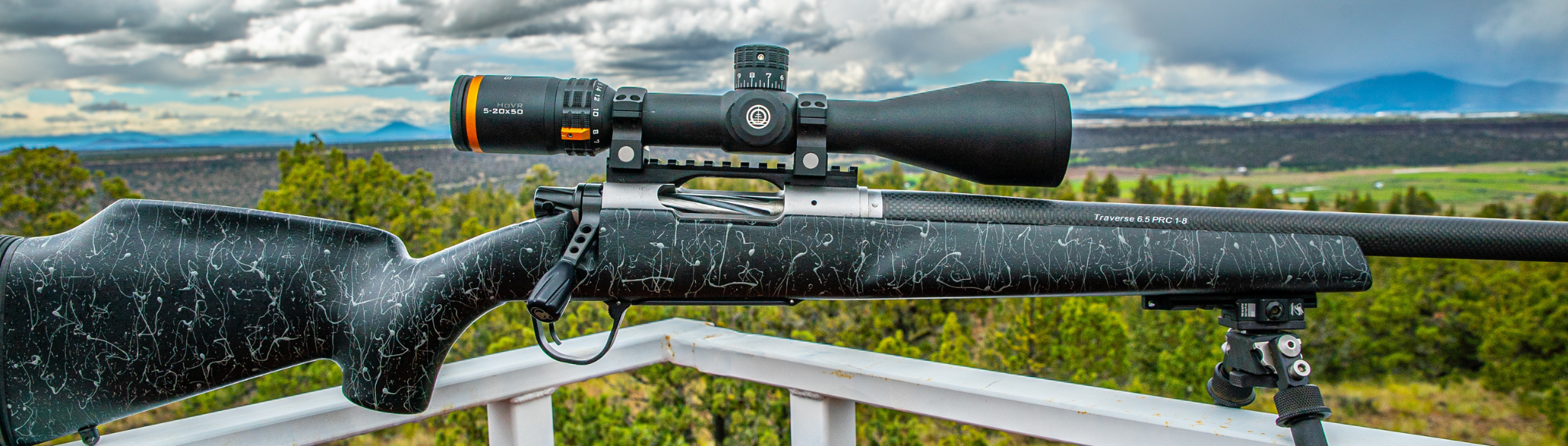
When shopping for a riflescope, one of the biggest decisions you’ll face is choosing between an MOA or MRAD reticle. Both systems are highly effective, both are capable of extreme precision, and neither is inherently more accurate than the other.
The real difference comes down to how they measure adjustments, how shooters prefer to communicate corrections, and the type of shooting they do most often.
Whether you’re a hunter, recreational shooter, competitive marksman, or long-range enthusiast, understanding the differences between MOA and MRAD can help you select the reticle system that best matches your shooting style.
What Is an MOA Reticle?
MOA stands for Minute of Angle, an angular measurement system commonly used throughout the United States.
One MOA equals approximately 1.047 inches at 100 yards, though most shooters simplify this to 1 inch at 100 yards.
As distance increases, MOA values scale proportionally:
- 1 MOA ≈ 2 inches at 200 yards
- 1 MOA ≈ 5 inches at 500 yards
- 1 MOA ≈ 10 inches at 1,000 yards
Many American shooters appreciate MOA because it works using inches and yards, which can feel intuitive and easy to understand.
Why Shooters Choose MOA
MOA reticles are often preferred by:
- Hunters
- Recreational shooters
- Precision shooters who think in inches
- Shooters transitioning from traditional hunting optics
Many users feel MOA provides finer adjustment increments, making it easier to make precise corrections at shorter distances.
Because the system has been widely used for decades, many experienced hunters and long-range shooters continue to prefer it for it’s simplicity.
The H59™-MOA Reticle – by Horus Vision
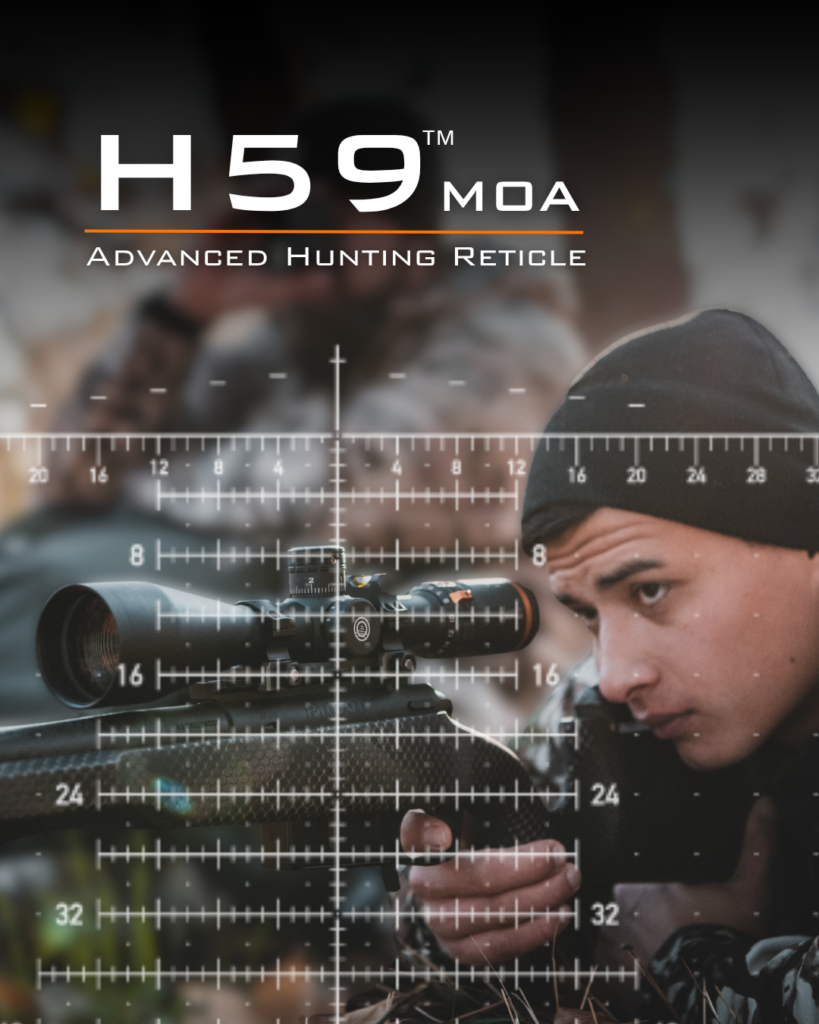
For shooters who prefer MOA but still want the advantages of a modern grid holdover reticle, the Horus Vision H59™-MOA reticle is an excellent option.
Unlike traditional MOA reticles that provide only a few hold points, the H59™-MOA features a full Horus Grid system that allows shooters to hold for elevation and wind directly in the reticle.
The design includes a 1 MOA grid structure and patented Rapid Range Bars for fast target ranging, wind holds, and rapid follow-up corrections.
This makes it especially effective for hunters and long-range shooters who want the familiarity of MOA while gaining the benefits of advanced reticle technology.
Learn more about the H59™-MOA reticle Here:
What Is an MRAD Reticle?
MRAD (Milliradian), often shortened to “MIL,” is another angular measurement system used in riflescope reticles.
The math here is a little different. In MRAD reticles, one MRAD equals 3.6 inches at 100 yards or 10 centimeters at 100 meters.
Rather than making corrections in quarter-MOA increments, MRAD users typically think in tenths:
- 0.1 Mil
- 0.2 Mil
- 1.0 Mil
- 2.0 Mil
This streamlined approach has made MRAD the dominant system among military, law enforcement, precision rifle competitors, and many modern long-range shooters.
Why Shooters Choose MRAD
MRAD reticles are often preferred by:
- Precision rifle competitors
- Long-range shooters
- Military and law enforcement professionals
- Shooters who regularly communicate corrections with spotters
One major advantage of MRAD is communication efficiency. A spotter can quickly call, “Impact was 0.4 mil left and 0.2 mil low,” allowing the shooter to make immediate corrections without converting measurements into inches.
MRAD also pairs exceptionally well with modern grid-style reticles because shooters can hold for elevation, wind, and follow-up corrections without ever having to touch their turrets.
The Horus Vision TREMOR Reticle Series
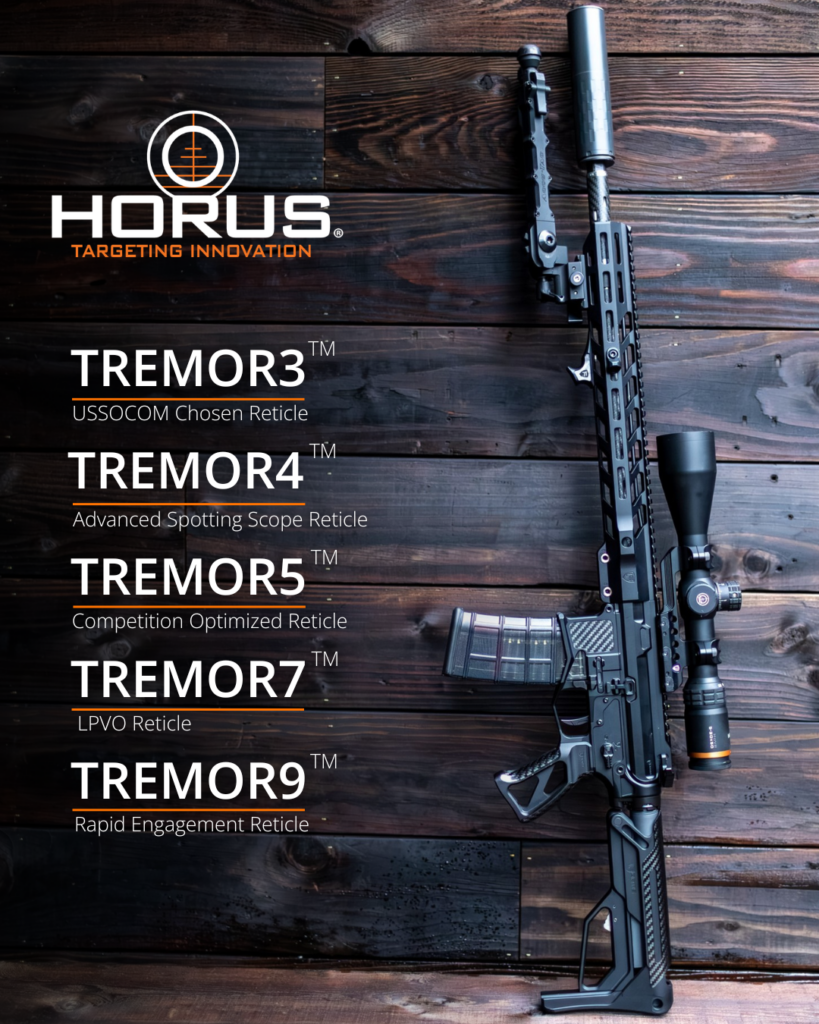
If you’re looking for one of the most advanced MRAD reticle systems available today, the Horus Vision TREMOR family represents the evolution of modern hold-based shooting.
Built around the Horus Grid system, TREMOR reticles allow shooters to rapidly engage targets using precise elevation and wind holds while remaining behind the gun.
Features such as Time-of-Flight Wind Dots, detailed grids, and rapid correction references help shooters make faster adjustments and stay engaged during changing conditions.
Popular options include:
- TREMOR3™
- TREMOR5™
- TREMOR7™
- TREMOR9™
For a complete breakdown of the TREMOR lineup Click Here.
Trying to decide between two of Horus Vision’s most popular reticles? You can see that TREMOR3 vs TREMOR5 comparison here.
And if you want to compare MRAD grid reticles against traditional Bullet Drop Compensation (BDC) reticles, be sure to read our guide on BDC vs MRAD grid reticles.
MOA vs. MRAD: Which Is Better?
The truth is that neither system is objectively better.
Both MOA and MRAD are simply measurement systems. A skilled shooter using MOA can be every bit as accurate as a skilled shooter using MRAD.
The better question is: Which system matches the way you think and shoot?
Choose MOA if:
- You prefer working in inches and yards
- You primarily hunt or shoot recreationally
- You already own MOA-based optics
- You want familiar measurements and terminology
Choose MRAD if:
- You want to maximize hold-based shooting techniques
- You shoot long range regularly
- You compete in precision rifle matches
- You work with a spotter
Final Thoughts
Ultimately, the MOA and MRAD both have proven track records and loyal following. The best choice comes down to your shooting style, preferred measurement system, and how you engage targets.
If you prefer traditional measurements and want an advanced MOA-based holdover reticle, the Horus Vision H59™-MOA offers the best of both worlds by combining familiar MOA values with the power of the Horus Grid.
If your focus is precision shooting, competition, long-range engagements, or rapid target transitions, the MRAD-based TREMOR reticle family provides one of the most capable reticle systems available today.
Whichever system you choose, the key is consistency. Learn your reticle, understand your holds, and practice regularly. Once you become fluent in either MOA or MRAD, you’ll be able to engage targets faster, make more accurate corrections, and shoot with greater confidence at any distance.
