TREMOR3™ vs. TREMOR5™: The Ultimate Head-to-Head Reticle Comparison
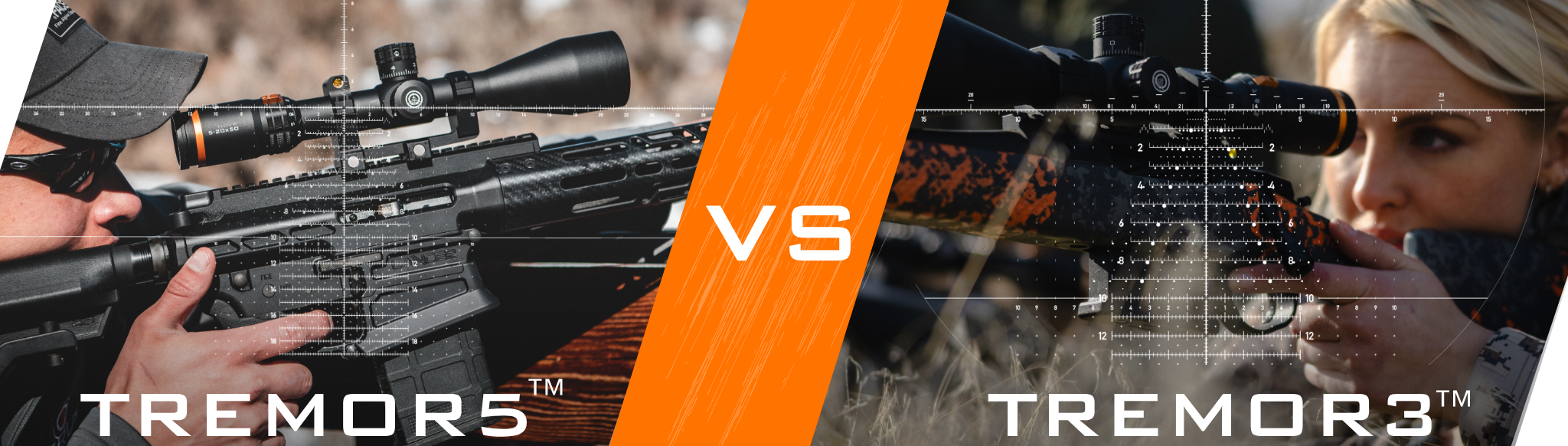
When shooters start exploring advanced mil-based reticles, two names consistently rise to the top: the TREMOR3™ and the TREMOR5™.
While both reticles are built on the Horus Vision foundation of speed, precision, and efficiency, they each approach that goal in slightly different ways.
Understanding how they compare will help you decide which system better fits your shooting style, application, and experience level.
TREMOR3™: USSOCOM Chosen Reticle
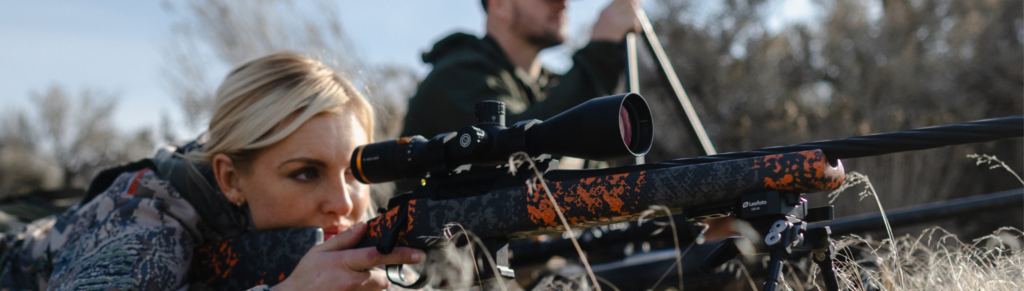
For many shooters, the TREMOR3™ is their introduction to the Horus reticle ecosystem.
And it sets a high bar.
This reticle is milliradian-based (MRAD) and is widely recognized for its depth of functionality. The TREMOR3™ reticle was adopted by USSOCOM, underscoring its real-world performance in demanding environments.
At its core, the TREMOR3™ is designed to give shooters everything they need inside a single reticle:
- A comprehensive grid system for precise elevation and wind holds across multiple distances and conditions
- Time-of-Flight wind dots that allow rapid wind calls without breaking position
- Rapid Range Bars for quick distance estimation
- Milling chevrons to determine a target’s height and width
- Moving target holds to quickly engage moving targets
The standout features are the patented Rapid Range Bars and the Time-of-Flight Wind Dot system.
The Rapid Range Bars subtend from 0.5 to 1 milliradians and enable quick range estimates to targets of known size.
By using the Time-of-Flight Wind Dot system, shooters can use these dots to make immediate wind calls based on bullet flight characteristics instead of relying heavily on external calculations.
Once mastered, these dramatically shorten the time between spotting an impact and sending a second-shot correction, if needed.
That being said, the TREMOR3™ is not necessarily a plug-and-play type reticle. Its information density requires training and repetition to get the most out of each feature set included in the reticle.
Shooters who commit the time and attention to learning it gain a highly capable, all-in-one shooting system that minimizes the need to dial, come off glass or reference additional tools.
TREMOR5™: Competition Optimized Reticle
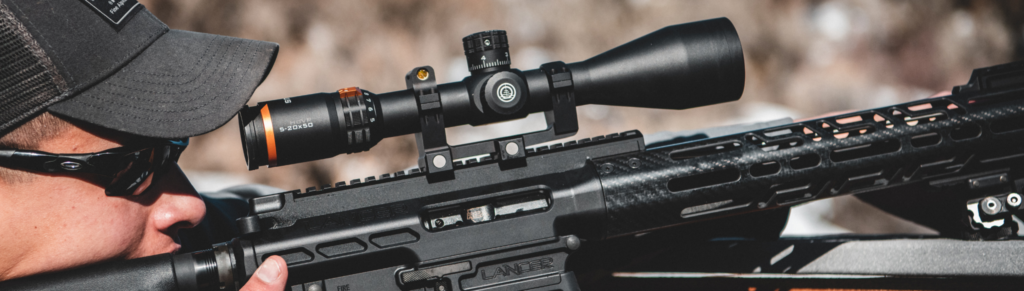
The TREMOR5™ was developed with a different priority: deliver the advantages of the TREMOR3™ system in a cleaner, more accessible format, particularly for competition shooters.
Rather than replicating the full feature set of the TREMOR3™, the TREMOR5™ simplifies the sight picture by removing the Rapid Range Bars and moving target references from the primary horizontal stadia.
What remains is a refined structure that helps you focus on fast, intuitive holds when time is of the essence.
Key characteristics include:
- Precise holdover and wind correction capability
- Reduced visual information for a more simplified view
- A more intuitive layout that shortens the learning curve
This streamlined approach makes the reticle easier to pick up and run effectively, especially under time pressure. Shooters can still take advantage of Horus-style holdovers without managing as much information on the reticle
For many, the TREMOR5™ strikes a balance between capability and usability, thus retaining performance while improving ease of use for shooters.
Key Differences at a Glance
While both reticles share the same DNA, their intent is different:
- The TREMOR3™ is a complete shooting system built into the actual reticle
- The TREMOR5™ is a simplified evolution of the TREMOR3™ designed for speed and accessibility
- TREMOR3™ includes advanced tools like Rapid Range Bars and full-feature wind dot integration
- TREMOR5™ prioritizes a cleaner sight picture and faster adoption, while still maintaining the Time-of-Flight Wind Dot system and key aspects of the TREMOR3™.
Which One Should You Choose?
The decision ultimately comes down to how you shoot and how much reticle complexity you like to manage.
The TREMOR3™ is best suited for shooters who want maximum capability inside their optic and are willing to invest time in mastering it. It excels in tactical, field, and precision applications where adaptability and information density are critical.
The TREMOR5™, on the other hand, is ideal for shooters who want to leverage the Horus system without the same level of visual and cognitive load.
It’s especially well-suited for competition environments or anyone transitioning into advanced MRAD reticles.
No matter which reticle you choose, you’re getting a proven system built to give shooters more capability, and more confidence in their long-range shooting skills.
Horus Ballistics App
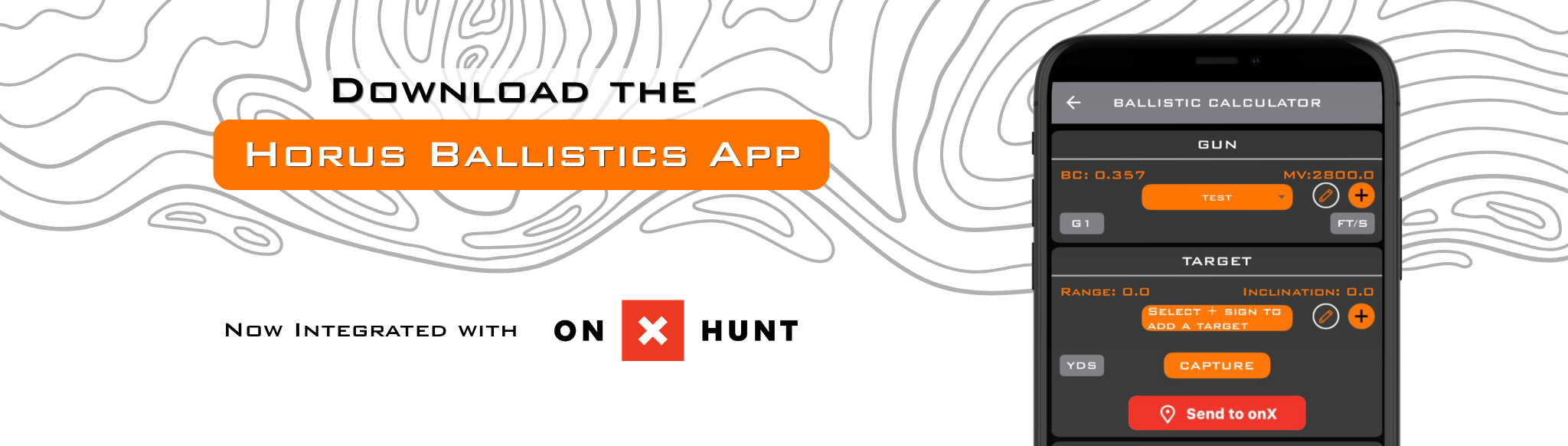
Unlock the full potential of both the TREMOR3™ and TREMOR5™ reticles, when you pair your scope and reticle system with the free Horus Ballistics App.
Built on the military-validated ATRAG ballistic solver, the app instantly translates complex atmospheric data for your specific rifle profile.
By syncing the app via Bluetooth to HoVR® weather meters or laser rangefinders, you can see your muzzle velocity and calculate highly precise firing solutions in seconds, making it the ultimate field companion for maximizing the speed and accuracy of your Horus reticle.
Learn More
For a deeper look at the full TREMOR family, read our The Complete Guide to the Horus Vision TREMOR Reticles to compare the other reticles in the lineup and see which one best fits your shooting needs.
The TREMOR series of reticles can be found in products manufactured by approved licensees. For a full list of those offering Horus reticles, please visit this page.
