Original article by Todd Hodnett
This is a big decision, and it should not be taken lightly.
I remember growing up and saving every dollar I had to buy a rifle. Once I finally had it, I would pair it with whatever scope I could afford at the time.
Looking back, that approach was backwards.
The optic is the defining part of the entire shooting experience and weapon system.
What you can see determines what you can do. In many ways, your rifle will never perform better than what your scope allows it to.
A good optic does not just support accuracy. It unlocks it.
Let’s break down the key factors that actually matter.
Accuracy is one of the biggest reasons to choose a quality scope.
One of the first things I look at is how easily parallax can be adjusted.
Parallax is what allows the target and the reticle to sit on the same focal plane. When that happens correctly, the reticle stays fixed on target even if your eye moves slightly behind the scope.
When parallax is not set correctly, problems start to show up quickly:
The issue is that your eye is fast. It can focus on the reticle even when it is not truly aligned, which can hide the problem.
Then, when your head moves slightly, the reticle appears to move on target. That creates confusion about what is actually happening.
A properly set parallax system removes that uncertainty.
The goal is simple:
Range markings on the parallax dial are only a reference. What matters is dialing until the target is truly sharp and stable.
Another major factor is tracking reliability.
Tracking refers to whether your scope actually moves the correct amount when you dial elevation or wind.
A simple example is a box test:
In a perfect world, you return to your starting point and form a square.
Most decent scopes can do this at a basic level.
The real issue shows up in small errors that compound over distance.
For example, a scope might:
I once tested a scope with a Navy SEAL during a tracking evaluation using a CATS target. At first glance, everything looked correct. At small increments, the system appeared accurate.
But when we scaled the test to 10 mils, the error became obvious. What should have been 10 mils showed closer to 10.4 mils.
That may not sound like much, but it matters.
At distance, even small inconsistencies affect real-world impact, especially when combined with rifle dispersion.
This is why proper testing matters:
Tracking is one of the most important trust factors in any optic.
Glass quality is not equal across all scopes.
Some optics may look good in store lighting, but fall apart in real-world conditions.
Higher-end scopes generally use better glass and coatings, which directly affects:
A clear image is not just about “seeing better.” It directly impacts decision-making and speed.
In practice, a good scope allows you to spend more time evaluating the environment instead of fighting the optic.
One important note:
If parallax is not properly set, even the best glass will not appear sharp. Everything works together.
Also, ignore the idea that parallax distance markings are exact. A “500 meter” setting does not guarantee perfect focus at 500 meters. You must adjust until the image is truly sharp.
Older optics often suffered from distortion issues like “pincushioning,” especially with grid-based reticles.
Most modern quality scopes have largely solved this problem.
Still, it is important to understand one key concept:
What feels like the “center” of the glass is not always the true optical center.
Your shooting position, rail alignment, and zero distance all affect what part of the lens you are actually using.
In practice:
Good glass minimizes distortion across the entire image, not just the center.
This is one of the most important decisions in modern optics.
First Focal Plane (FFP)
The reticle changes size as magnification changes, but it always stays proportional to the target.
That means:
This is why most long-range and military-style shooting favors FFP.
That means:
This is why most long-range and military-style shooting favors FFP.
Second Focal Plane (SFP)
The reticle stays the same size while the target changes.
The reticle stays the same size while the target changes.
That means:
SFP can work well for low-power optics or hunting setups where shots are fast and simple.
FFP is generally more flexible for precision and long-range use.
Reticles are not just preference. They are tools, and each one serves a different purpose.
Here is a simplified breakdown of common TREMOR reticle roles:
TREMOR3™ – USSOCOM Chosen Reticle
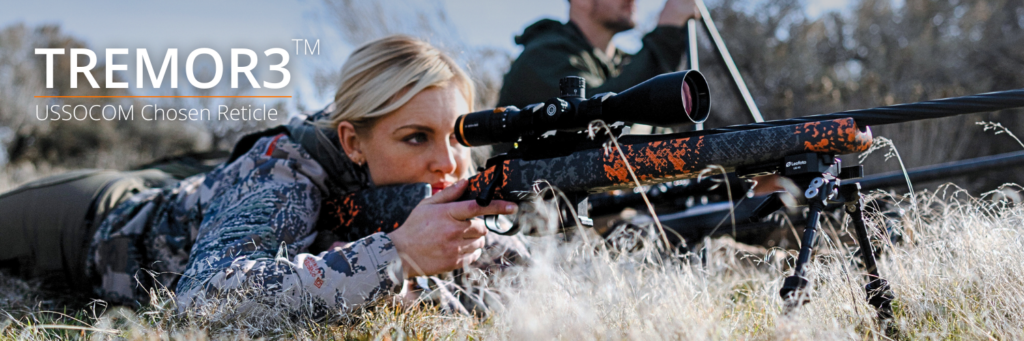
Best for shooters who want maximum capability and are willing to learn a detailed system.
This is the most advanced option with the highest level of functionality.
TREMOR4™ – Advanced Spotting Scope Reticle
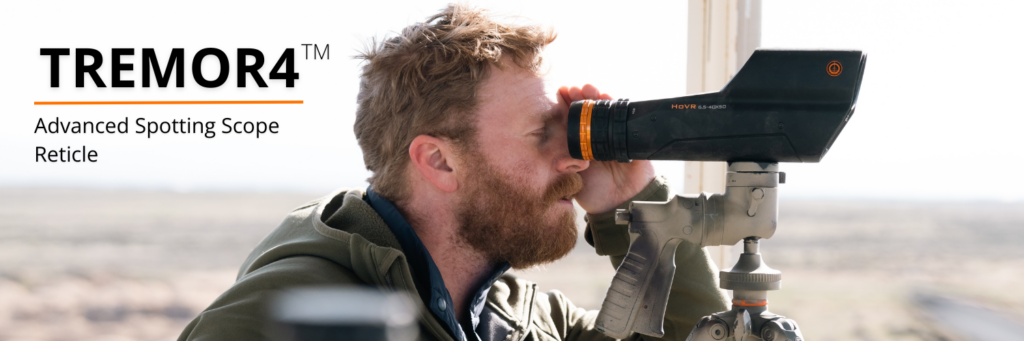
Designed for spotting and team communication.
Best when your job is to observe, call corrections, and guide another shooter.
TREMOR5™ – Official Reticle of the PRS
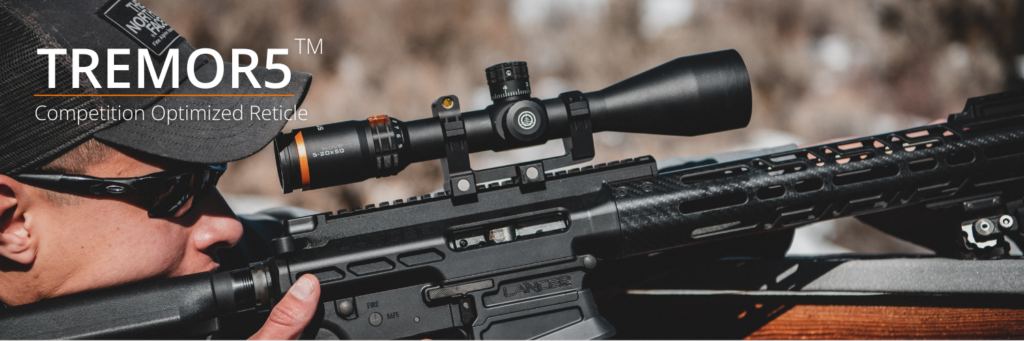
A balance between capability and simplicity.
Cleaner presentation while still maintaining strong performance features.
TREMOR7™ – LPVO Reticle
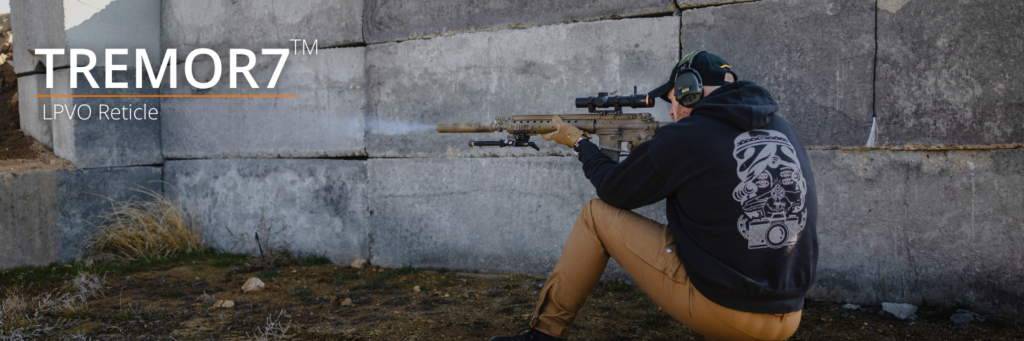
Built for short to mid-range shooting with Low Power Variable Optics (LPVO) setups.
Optimized for fast acquisition and practical engagement distances.
TREMOR9™ – Rapid Engagement Reticle
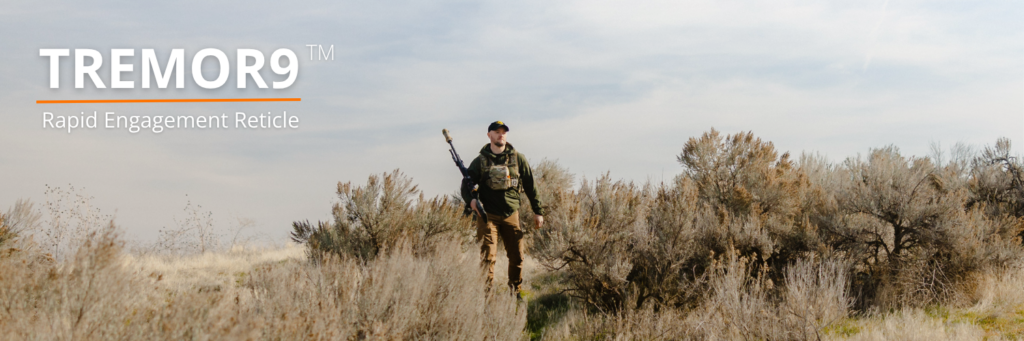
A minimal, easy-entry option into the system.
Best for newer users or those who want a simpler visual layout.
Each reticle is designed around a specific use case, not just preference.
If you are looking to apply everything discussed here in a complete system, the HoVR® riflescope lineup from Horus Vision offers purpose-built options for different shooting environments.
HoVR® 5-20×50 Riflescope
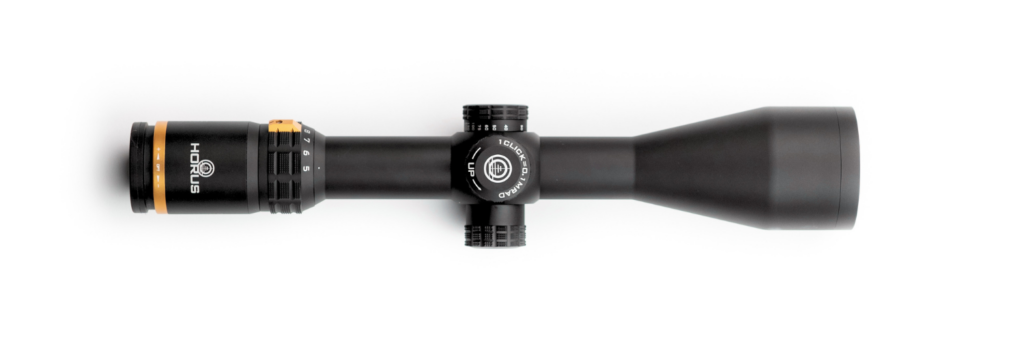
The HoVR® 5-20×50 Riflescope is designed for shooters who prioritize precision at distance. This magnification range gives you the flexibility to engage mid to long-range targets while still maintaining a usable field of view.
It is a strong fit for:
With TREMOR reticle options, this scope allows you to fully leverage grid-based holds, fast corrections, and wind reading without relying solely on dialing.
HoVR® 1-8x24mm LPVO Riflescope
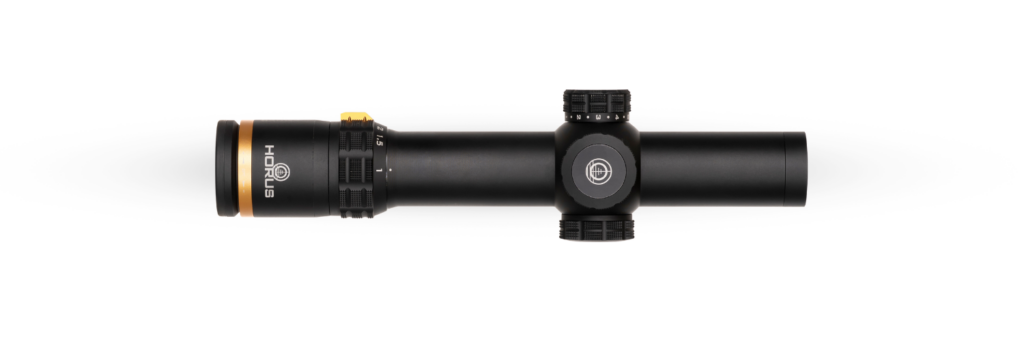
The HoVR® 1-8×24 LPVO Riflescope is built for speed and versatility. At 1x, it functions almost like a red dot for rapid target acquisition. At 8x, it provides enough magnification for more precise engagements at distance.
This makes it ideal for:
Paired with reticles like the TREMOR7™, it gives shooters the ability to hold quickly and engage targets efficiently without breaking flow.
Horus Vision reticles are not limited to HoVR® optics.
We partner with some of the most trusted manufacturers in the industry to bring TREMOR reticles to a wide range of platforms. That includes brands like Leupold, Nightforce Optics, and Vortex Optics, along with many others.
See the full list of brands authorized to sell Horus reticles here.
If you already have a preferred scope brand or platform, there is a good chance you can still run a TREMOR reticle within that system.
There are more optic options today than ever before, from simple hunting scopes to advanced long-range systems.
The most important takeaway is this:
Not all scopes are equal, even if they cost the same.
Before buying, do your homework. If possible, test the optic in real conditions. Run a tracking drill. Check clarity in natural light. Understand how it behaves under stress.
A scope is not just an accessory.
It is the system that determines how effectively your rifle can actually perform. So, choose wisely.
