
Posted by Horus Vision on May 1st 2026
Whether you are working through a competition stage, checking impacts at the range, or hunting across a canyon, seeing your target and impacts are critical. Having the right spotting scopes makes that much easier.
But choosing a spotting scope is not just about buying the most powerful or expensive optic you can find. Magnification, objective size, weight, image quality, and even the tripod underneath it all affect how useful that optic will be for your application.
A good spotter should consider the various tradeoffs to give the best performance for your specific application. Here are some things worth considering before you buy.
Why Use a Spotting Scope Instead of Binoculars?
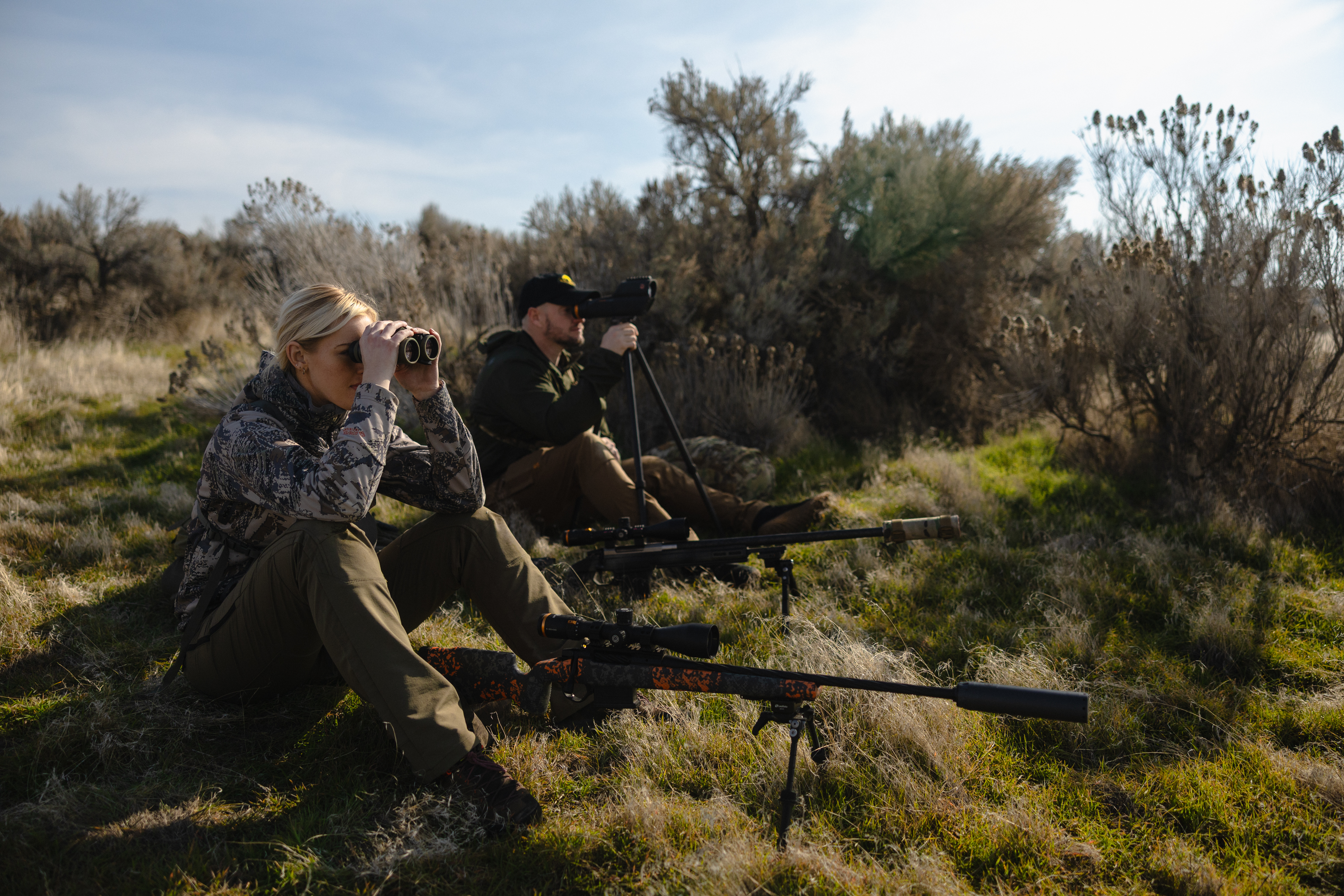
Binoculars are excellent for scanning large areas, finding animals, and getting a general picture of the terrain. They are also usually easier to carry and more comfortable for extended glassing.
A spotting scope serves a different purpose.
With higher magnification, a spotter is designed to help you examine a specific area or animal in greater detail. On the range, that might mean precisely measuring impacts, watching a target for movement, or seeing how a shot affected the target. In the field, it might mean confirming an animal’s size or determining features to ensure legality that are difficult to resolve with binoculars.
The tradeoff is that spotting scopes are generally larger and can induce eye strain. They need a stable support, and the higher magnification makes even small movements more noticeable.
Think of binoculars as your broad scanning tool for frequent use and high level information and a spotting scope as your detail tool when you need to get it right.
Spotting scopes have all kinds of use cases and the best option is the one that serves your use case or cases the best. Don’t get fixated on a brand, price point, objective size, etc. Consider what you plan to use it for and focus on what features provide the maximum benefit to you.
Objective Size: Choose The Right Size For Your Application
Objective size is one of the first specifications people look at when comparing spotting scopes. A larger objective lens can gather more light, which can be useful in very low-light conditions or when viewing at higher magnification. It will also provide a larger exit pupil at higher magnification which is great for spotting small impacts at the range.
The obvious drawback is that it tends to be large and heavy, which isn’t ideal if your primary use case involves packing and carrying your spotting scope.
For many hunters or anyone looking to pack their spotting scope or carry it with a lot of other gear, a 40-60mm objective is a practical middle ground. It can provide high image quality and brightness without adding as much bulk and weight to a pack.
Larger objectives can be excellent for range use or where weight isn’t an issue but you’re not going to want to carry them around for days in the mountains.
Magnification Range: How Much Do You Actually Need?
Like everything else with a spotting scope, different magnifications come with different pros and cons.
At higher magnification, you can see farther and more clearly in general. The trade offs being atmospheric conditions, mirage, and vibration become more apparent and the exit pupil becomes smaller as you increase power.
As you increase magnification, you will also reduce your field of view (FOV), making it more challenging to find and stay on your target. This also often creates confusion in shooter-spotter situations.
Lower magnifications obviously limits the range and details you can see but provides a more forgiving eye box and wider FOV while often fitting into a smaller package. The wider FOV is ideal for scanning larger areas and finding targets. This is often ideal when hunting or engaging multiple targets at the range where you want to get on target quickly.
If you are shooting extreme distances or need to see small impacts and you have a stable base higher magnification is great but if you’re searching for targets that are spread out or shooting at less extreme distances the larger exit pupil and wider FOV of lower magnification tend to be more functional.
Image Quality Is Critical
It is clear that image quality can vary greatly between options, despite identical headline “specs”, often making that big objective or high magnification of limited use. Again, depending on your application, you may not need the most expensive or largest objective optic on the market, but ensure you choose image clarity that serves your purpose.
When comparing optics, pay attention to:
- Edge-to-edge clarity: Is the image useful across the field of view, or does it become noticeably blurry toward the edges?
- Color and contrast: Can you distinguish details and see colors clearly?
- Color correction: Do you see color fringing?
- Resolution: Can you separate small details at distance?
- Low-light performance: How well does the image hold up as the light changes?
- Focus control: Can you make precise adjustments to get a clear image?
These things matter because a spotter is not just about making the target appear larger. It is about seeing clearly what you want to see.
A sharp image at 25x can be more valuable than a blurry or unstable image at 60x. Look carefully at the image quality at the magnification ranges you tend to use to ensure you can clearly see what you need for your application.
Reticle or No Reticle?
A spotting scope is an observation tool, but it can also be a measurement and communications tool.
If you’re simply digi-scoping or observing wildlife these additional capabilities aren’t generally needed. A reticle-equipped spotter however, adds the ability to precisely describe where a target is located or what correction to make to get on target quickly, offering significant advantages for shooting and hunting applications.
Instead of simply saying, “a little left,” the spotter can use the reticle to describe a specific location of an animal or shot correction in MRAD or MOA, making communications faster and getting on target or making second shot corrections much quicker. The precision and speed are ideal in competition or hunting scenarios where speed, accuracy, and precision are critical.
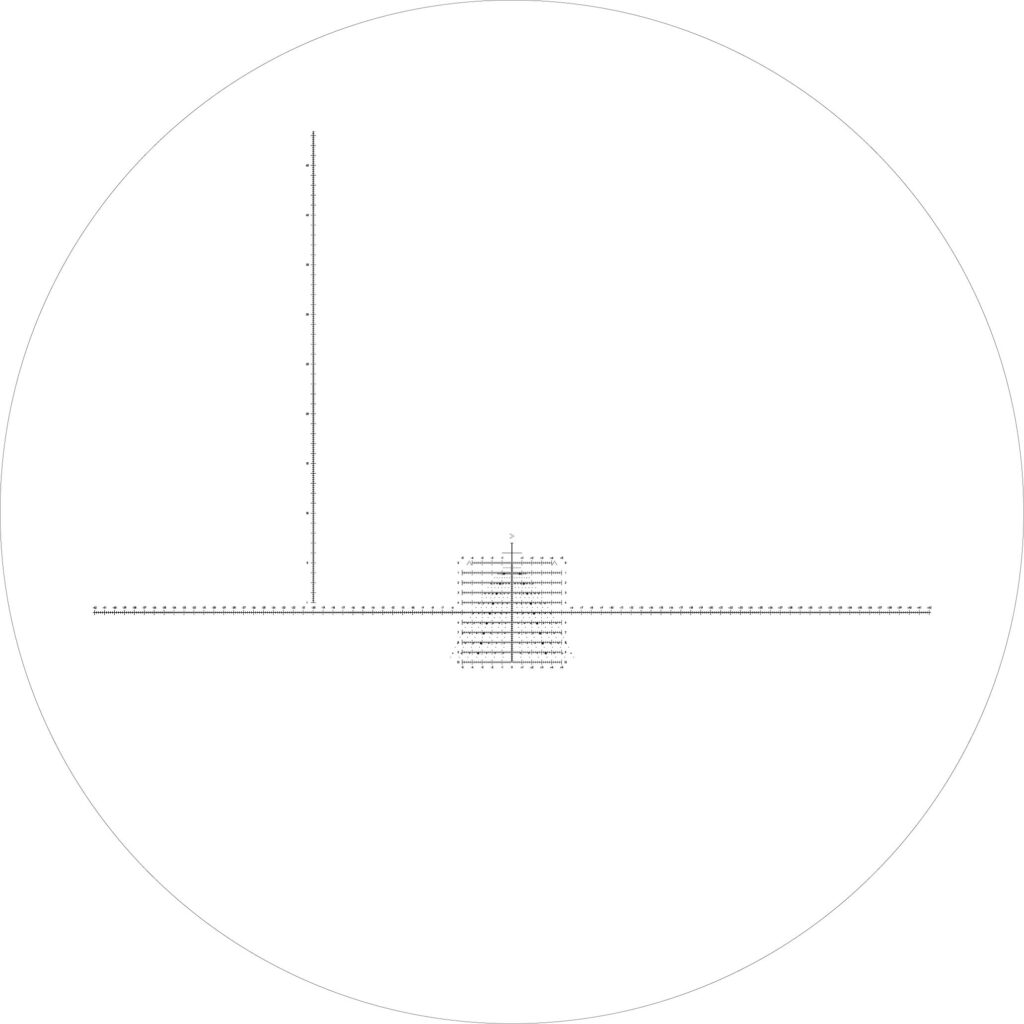
The TREMOR4® Reticle
Widely used by military and civilian shooters alike, the TREMOR4 is designed to work as a companion to the shooter’s reticle, particularly for shooters using other TREMOR reticles or any mil-based riflescope reticle. It includes features such as the .2 mil increment Horus grid, patented Time-of-Flight Wind Dots, and TREMOR milling chevrons.
The TREMOR4 allows for:
- Fast and accurate 2nd shot corrections
- Precise measurement of impacts
- Quickly and accuratly estimating target range
- Clearly communicating with a shooter using a compatible reticle
- Rapidly talking a shooter onto the correct target
For shooting applications a feature rich reticle provides a meaningful advantage.
The Tripod: A Stable Base is Critical
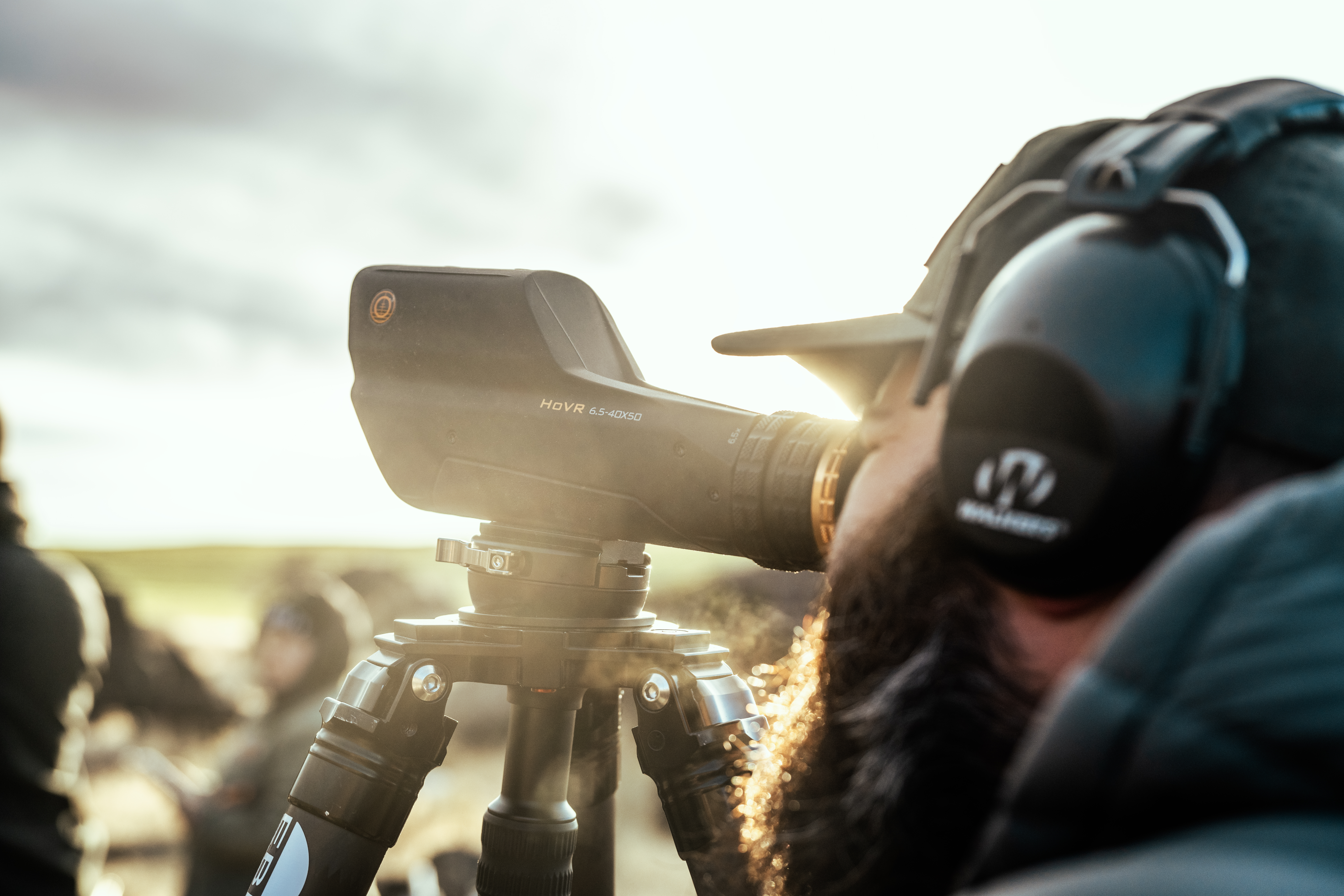
You can pick the perfect spotting scope for your application, but it will still be frustrating to use if it isn’t mounted on a stable base.
At high magnification, even very small vibrations will severely limit what you can see. Wind, tripod adjustments, and adjusting the spotter will make the image shake. That makes it harder to see impacts and can make high magnification feel almost useless.
When choosing a tripod, look for:
- A stable platform that matches the weight and size of your optic
- A weight hook to stabilize the tripod
- A head that allows smooth, controlled movement
- Enough height for your preferred use case
- A quick-release system that makes mounting and removing the scope quick and easy
- A setup that is practical for how far you plan to carry it
For a 50mm spotting scope, you generally do not need the same big, heavy tripod setup required for a much larger 80mm or 100mm optic. But that does not mean the cheapest, lightest tripod is automatically the right choice.
If you are building a range-focused setup, a sturdy tripod with a smooth pan or fluid head is worth serious consideration. If hunting is your plan a high quality, compact tripod will do the trick.
The goal is simple: do not spend a ton buying the perfect spotting scope only to be limited by a low quality tripod. Don’t buy the perfect compact, lightweight spotting scope then weigh yourself down with a heavy tripod.
Where the HoVR 6.5-40x50mm Fits
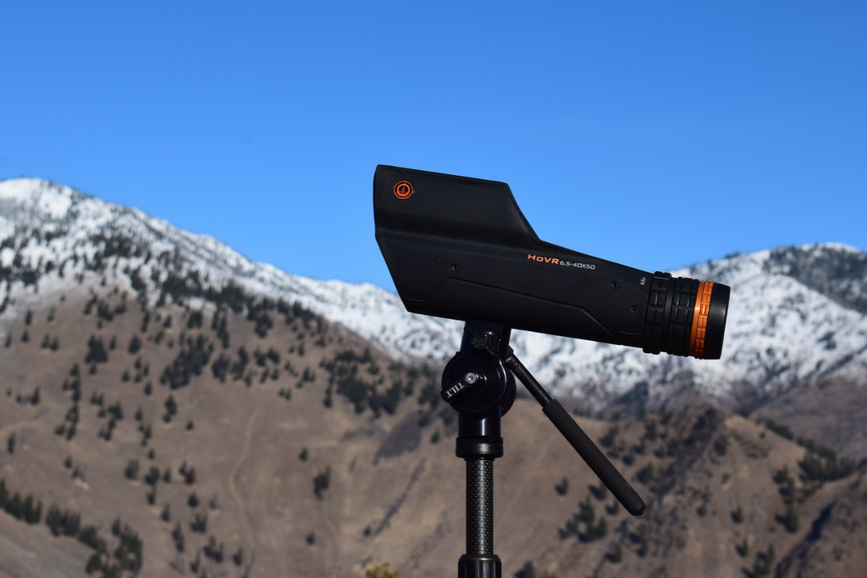
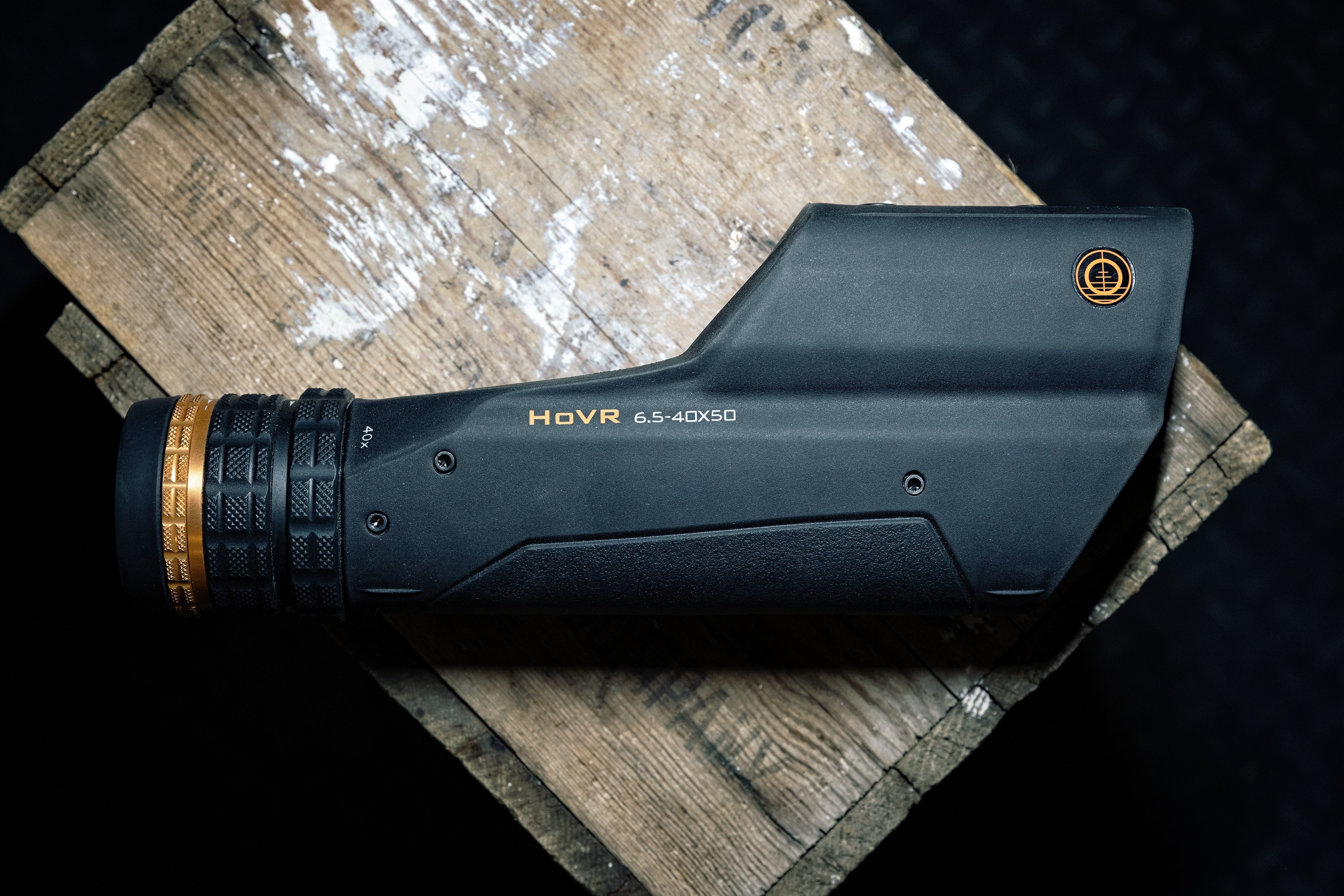
The HoVR® 6.5-40x50mm Spotting Scope is designed to be a well rounded middle ground option at an exceptional value. It is designed to provide exceptional optical quality in a compact form factor that fits equally well on the range or packed on a hunt.
Its 50mm objective keeps it in a more manageable size than many larger spotting scopes.
Its 6.5–40x magnification range gives it flexibility with the wide FOV at lower power great for scanning and higher power great for detailed observation. And its TREMOR4 reticle makes it particularly relevant to shooters who want their spotter to offer maximum capabilities in shooting scenarios.
Final Thoughts
The best spotting scope is not necessarily the biggest, most powerful, or most expensive one.
It is the one that gives you the image quality you need, the magnification you can actually use, and the portability and stability that fit your use case. For some people, that means a large objective and a heavy tripod.
For others, it means a compact setup that can travel into the mountains without becoming a burden. If you need extreme magnification, get it. If you need super compact, go with a lightweight and smaller objective. If you need all-around performance, pick something in the middle.
The HoVR 6.5-40x50mm is designed to sit in the middle. Its TREMOR4 reticle adds functionality for shooters who want maximum capability from their spotting scope, while its compact format makes it worth considering for those who do not want to carry a big, heavy spotter around everywhere.
Learn more about the HoVR® 6.5-40x50mm Spotting Scope .
Interested in the TREMOR4 reticle in other spotting scopes? Horus reticles are offered by every leading optics provider, find a full list HERE.