
Posted by Horus Vision on Aug 27th 2026
If you’re new to shooting with a riflescope, getting to know the system and how things work can seem a bit complicated at first. There are turrets, lenses, a reticle, magnification adjustments, and several other parts that may not be immediately obvious.
The good news is that once you understand what each part does, a riflescope becomes much easier to set up and use.
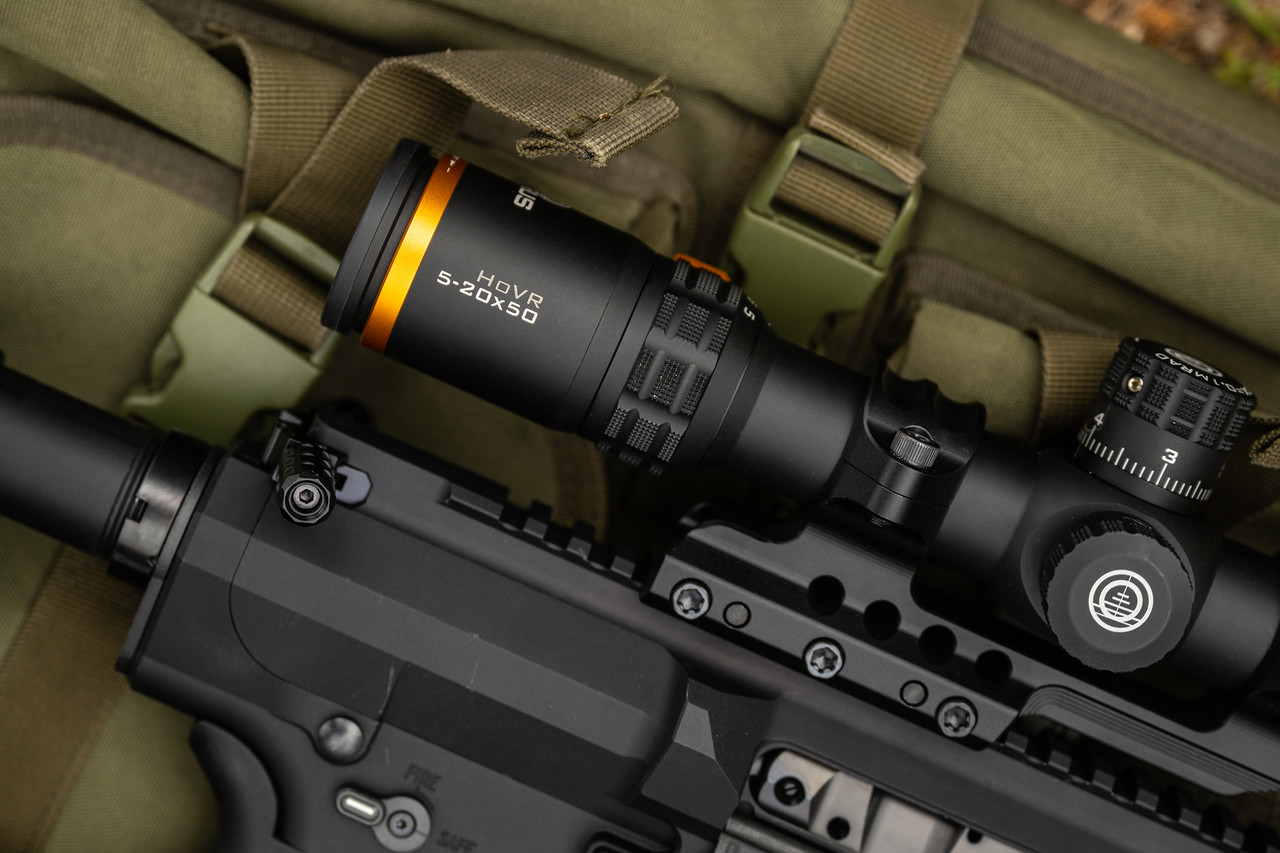
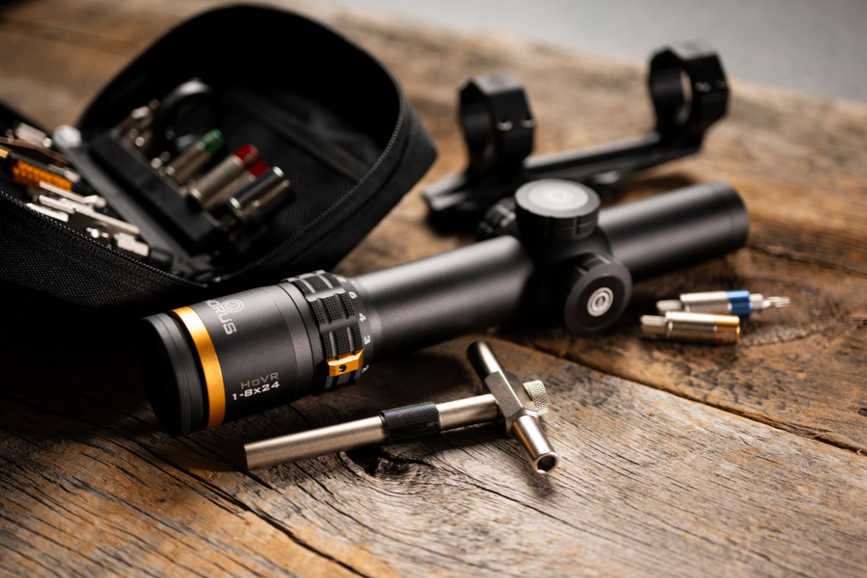
In this guide, we’ll break down the anatomy of a riflescope, explain what the major components do, and look at how those components come together in two Horus Vision optics: the HoVR® 5-20x50mm Riflescope and the HoVR® 1-8x24mm LPVO Riflescope.
We’ll also go over some common questions regarding riflescopes toward the end.
Let’s get right into it.
Riflescope Anatomy at a Glance
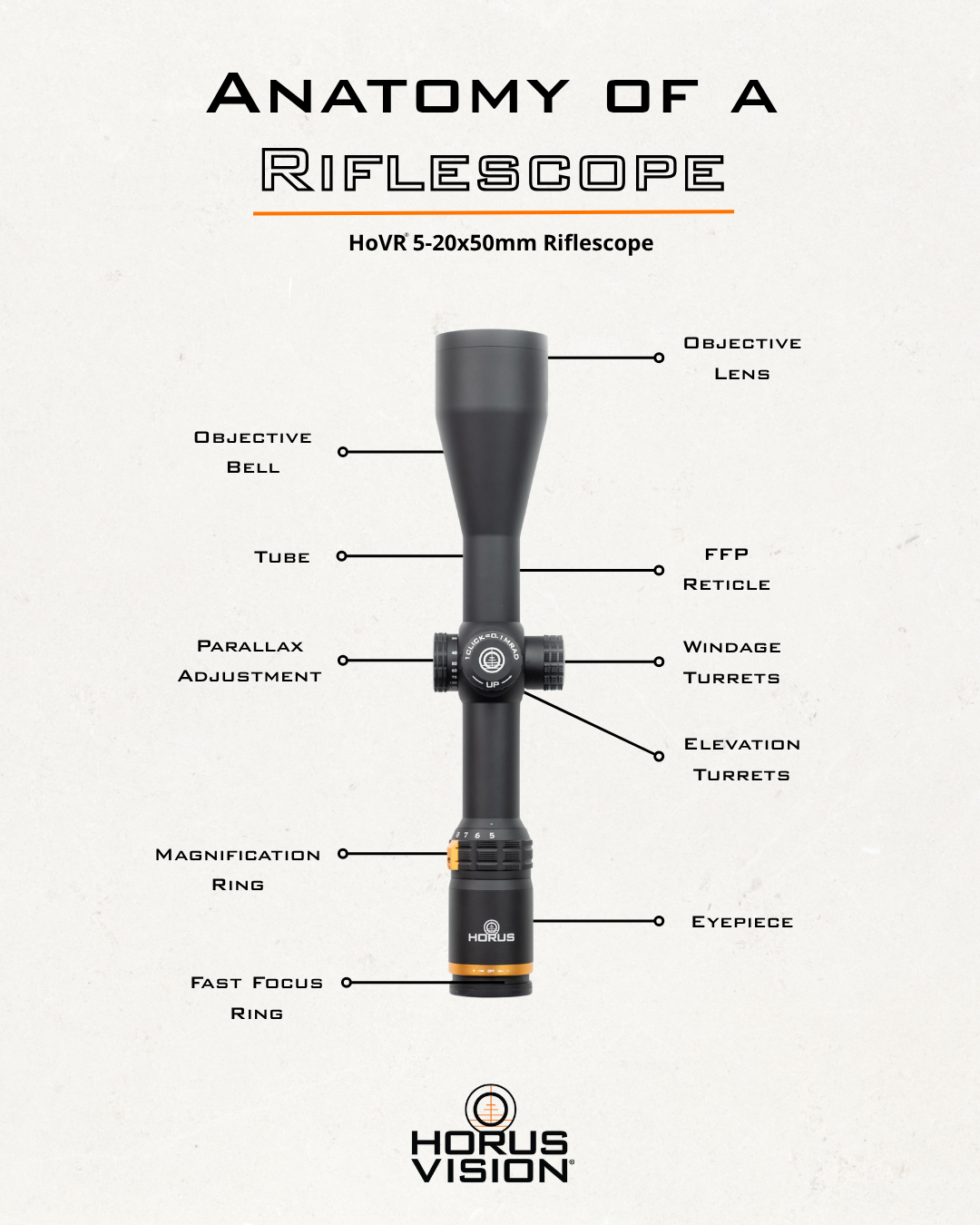
Before getting into the details, here are some of the most common parts you’ll find on a modern riflescope:
- Objective lens
- Objective bell
- Body tube
- Reticle
- Elevation turret
- Windage turret
- Parallax adjustment
- Magnification ring
- Eyepiece
- Fast-focus ring
- Diopter adjustment
- Illumination adjustment
Not every riflescope will have every feature, and their exact locations can vary. But the basic functions remain similar across scope platforms.
Objective Lens
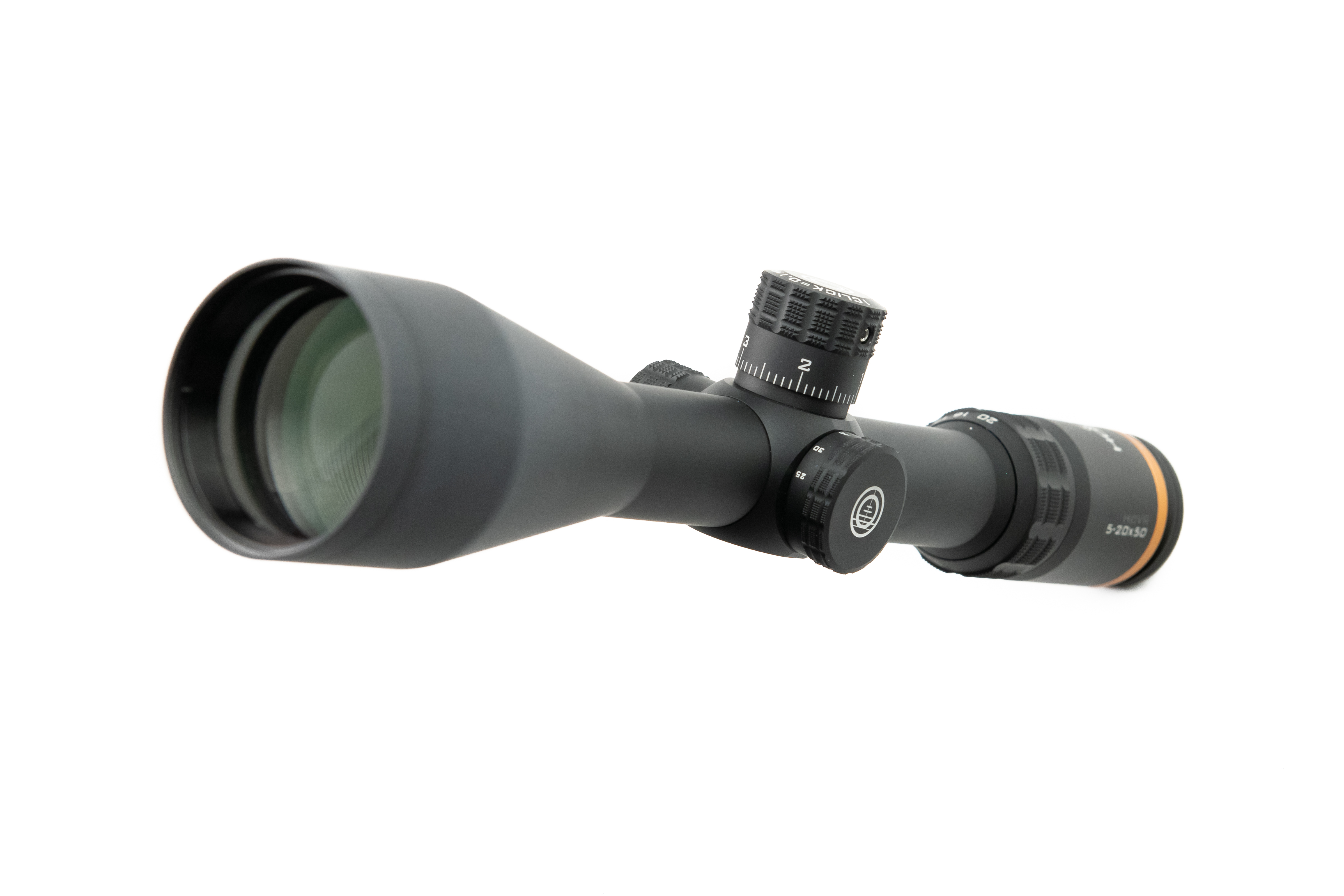
The objective lens is the large lens at the front of the riflescope, closest to the target.
Its primary job is to gather light and transmit the image into the scope. The size of the objective lens is typically expressed in millimeters as part of the scope’s name.
For example, the HoVR® 5-20x50mm has a 50mm objective lens, while the HoVR® 1-8x24mm LPVO has a 24mm objective lens.
A larger objective lens can help gather more light, but bigger is not automatically better. Objective lens size also affects the overall size and weight of the optic, as well as mounting considerations.
The important thing here is to keep the glass clean and protected, and have a lens size that meets the needs and capabilities of your shooting style.
Objective Bell
The objective bell is the larger section of the scope that surrounds the objective lens.
It’s easy to confuse the objective bell with the objective lens itself. The lens is the actual glass element. The bell is the housing around it.
The size of the objective bell is largely determined by the objective lens diameter. This is why a 50mm riflescope generally has a noticeably larger front end than a 24mm LPVO.
Body Tube
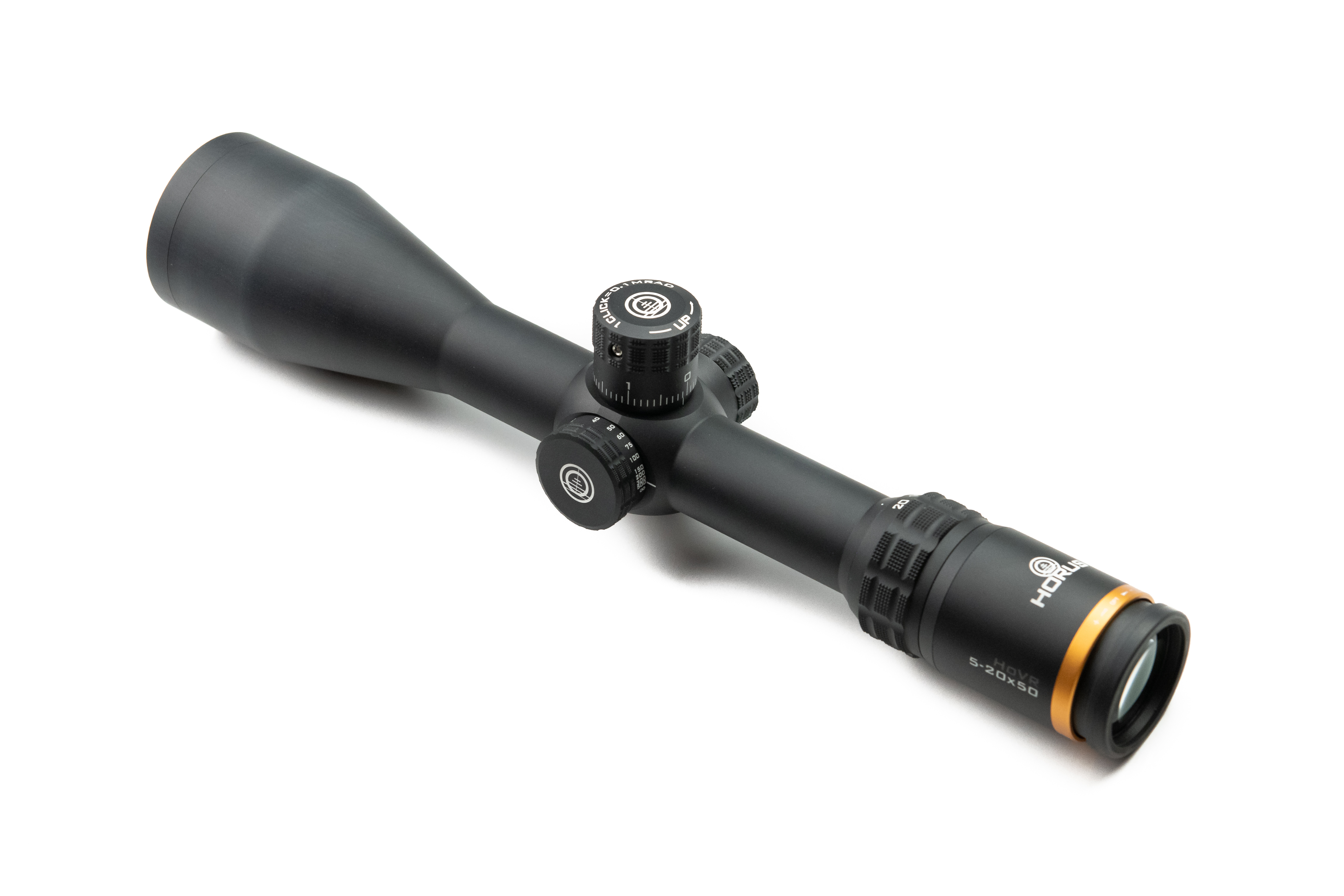
The body tube is the main housing that connects the front and rear portions of the riflescope.
It’s also the section that interfaces with your scope rings or mount.
The tube diameter is an important specification when mounting a scope. For example, the HoVR® 5-20x50mm uses a 30mm tube, while the HoVR® 1-8x24mm LPVO uses a 34mm tube.
When purchasing scope rings or a mount, make sure they are designed for your scope’s tube diameter.
Reticle
The reticle is the aiming pattern you see when you look through the scope.
Depending on the optic, a reticle might be a simple crosshair or a much more sophisticated system containing measurement references, holdover points, wind holds, ranging features, and more.
Horus Vision riflescopes use Horus reticles with an advanced “christmas tree” style grid reticle designed to give shooters additional feature sets inside the sight picture.
The HoVR® 5-20x50mm is available with several reticle options, including TREMOR3®, TREMOR5®, TREMOR9™, and H59®-MOA. The HoVR® 1-8x24mm uses the TREMOR7™ reticle.
Check out our Reticles page or the Reticle Simulator for more details about each of the Horus Vision reticle options.
Focal Plane
One important thing to understand with reticles is the focal plane. Both the HoVR® 5-20x50mm and HoVR® 1-8x24mm use First Focal Plane (FFP) reticles. This means the reticle size increases or decreases with the magnification, keeping its subtensions consistent throughout the magnification range.
If you’re unfamiliar with FFP and SFP scopes, check out “FFP vs. SFP Riflescopes: A Complete Comparison Guide” for a deeper dive into focal planes.
Elevation Turret
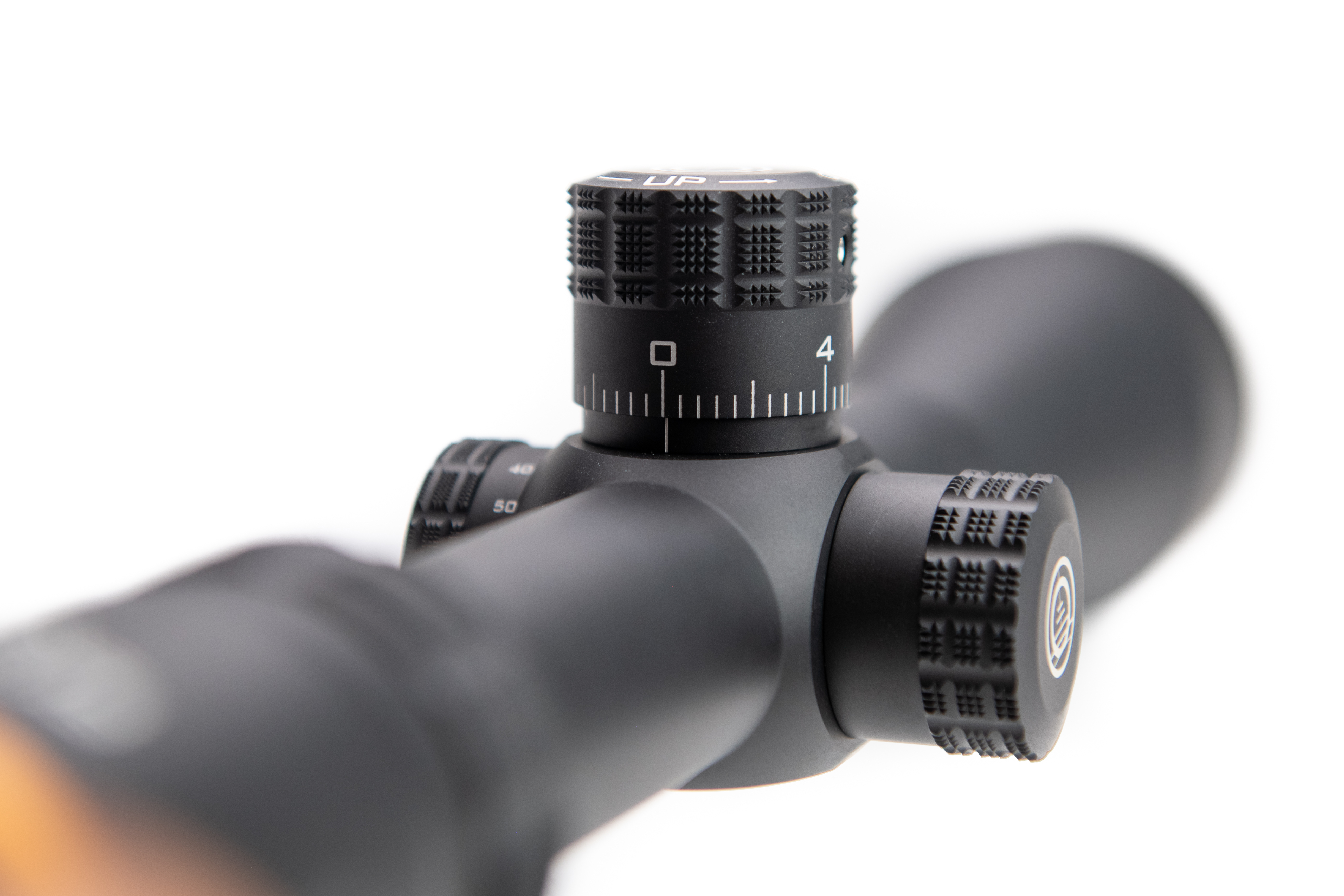
The elevation turret controls the vertical adjustment of the point of impact.
Think of it as controlling up and down on your sight picture.
When you adjust the elevation turret, you’re changing where the rifle is zeroed relative to the reticle.
For example, if your shots are consistently hitting below your intended point of aim, an elevation adjustment may be needed to bring your point of impact up.
The exact adjustment value depends on the scope. The HoVR® 5-20x50mm uses 0.1 MRAD clicks with an exposed, settable-zero elevation turret, while the HoVR® 1-8x24mm uses 0.1 MRAD clicks with capped elevation turrets.
Elevation adjustments are typically made when zeroing your rifle or when you intentionally dial an elevation correction into your scope. Always know what each click represents on your particular scope before making adjustments.
Windage Turret
The windage turret works much like the elevation turret, except it controls the horizontal adjustment.
Think: elevation controls up and down, while windage controls left and right.
Windage adjustments can be used when zeroing the rifle or when making corrections for changing wind conditions downrange.
Parallax Adjustment
The parallax adjustment helps align the reticle and target image on the same optical focal plane.
Parallax becomes particularly important at longer distances and higher magnification. If the scope has parallax error and your eye moves slightly behind the optic, the reticle can appear to move relative to the target.
A parallax adjustment lets you fine-tune the optic for a particular distance.
When shooting at a distance, adjust the parallax control until the target appears sharp and the reticle remains stable relative to the target when you move your eye slightly.
Parallax adjustment is especially useful on a high-magnification optic, such as the HoVR® 5-20x50mm riflescope.
Video:
https://www.youtube.com/watch?v=GNbf8SCN6Fc
Magnification Ring
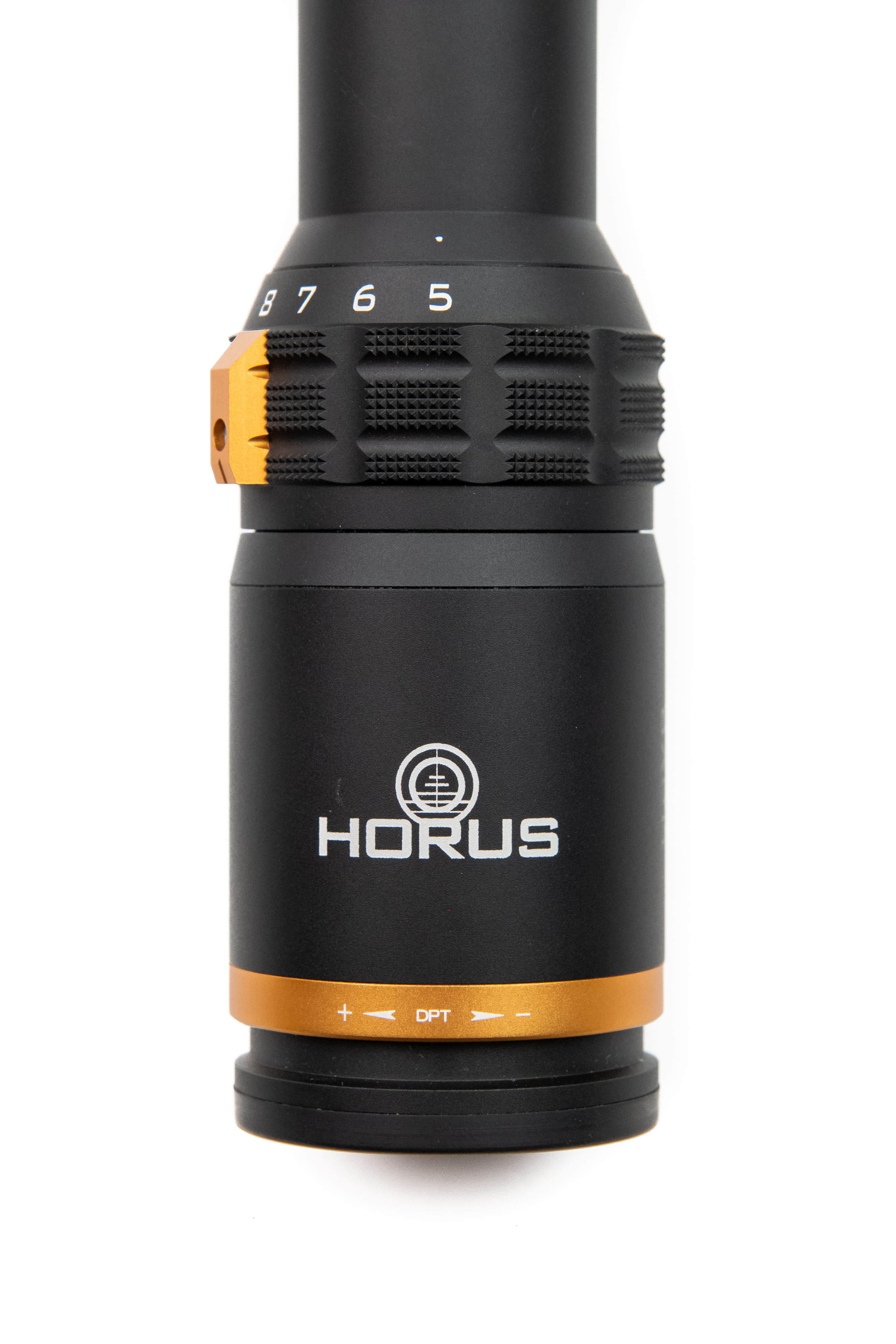
The magnification ring controls how much the target is magnified.
On the HoVR® 5-20x50mm, you can adjust between 5x and 20x magnification.
At 5x, you have a wider field of view and lower magnification. At 20x, you have a much more magnified view of the target, but a narrower field of view.
The HoVR® 1-8x24mm LPVO provides a different range, from 1x to 8x. At 1x, the optic is designed for fast target acquisition at close range. At 8x, you can take advantage of the reticle tools and have more magnification for longer shots.
Fast-Focus Ring
The fast-focus ring, located near the eyepiece, adjusts the focus of the reticle to your eye.
This is an adjustment you generally make during initial scope setup rather than constantly changing while shooting.
All you have to do is look through the scope at a clear, bright background and adjust the fast-focus ring until the reticle appears sharp and crisp.
The goal is to make the reticle clear to your eye, not necessarily to focus the target.
Once you’ve adjusted it for your eye, you should generally leave it alone.
Eyepiece
The eyepiece is the rear portion of the riflescope, the part closest to your eye.
It contains the optical components that allow you to view the magnified image and reticle.
The eyepiece works together with the fast-focus ring to provide a clear sight picture.
One important consideration when using an eyepiece is eye relief, which is the distance your eye can be from the scope while still seeing the complete sight picture.
Proper eye relief is especially important on riflescopes because of both comfort and safe scope positioning.
Illumination: Key Feature of the HoVR® 1-8x24mm
One feature that deserves special attention on the HoVR® 1-8x24mm LPVO is reticle illumination.
The illumination is designed to make the central portion of the reticle easier to see, particularly at lower magnification and in changing lighting conditions.
At 1x, the TREMOR7™ is designed to provide a fast, easy-to-acquire sight picture, with daylight-visible illumination, similar to a red dot. As you increase magnification toward 8x, the reticle provides more of its precision hold structure.
This is one of the reasons LPVOs can be so versatile: you can use them more like a traditional low-power optic at 1x and then increase magnification when you need more precision.
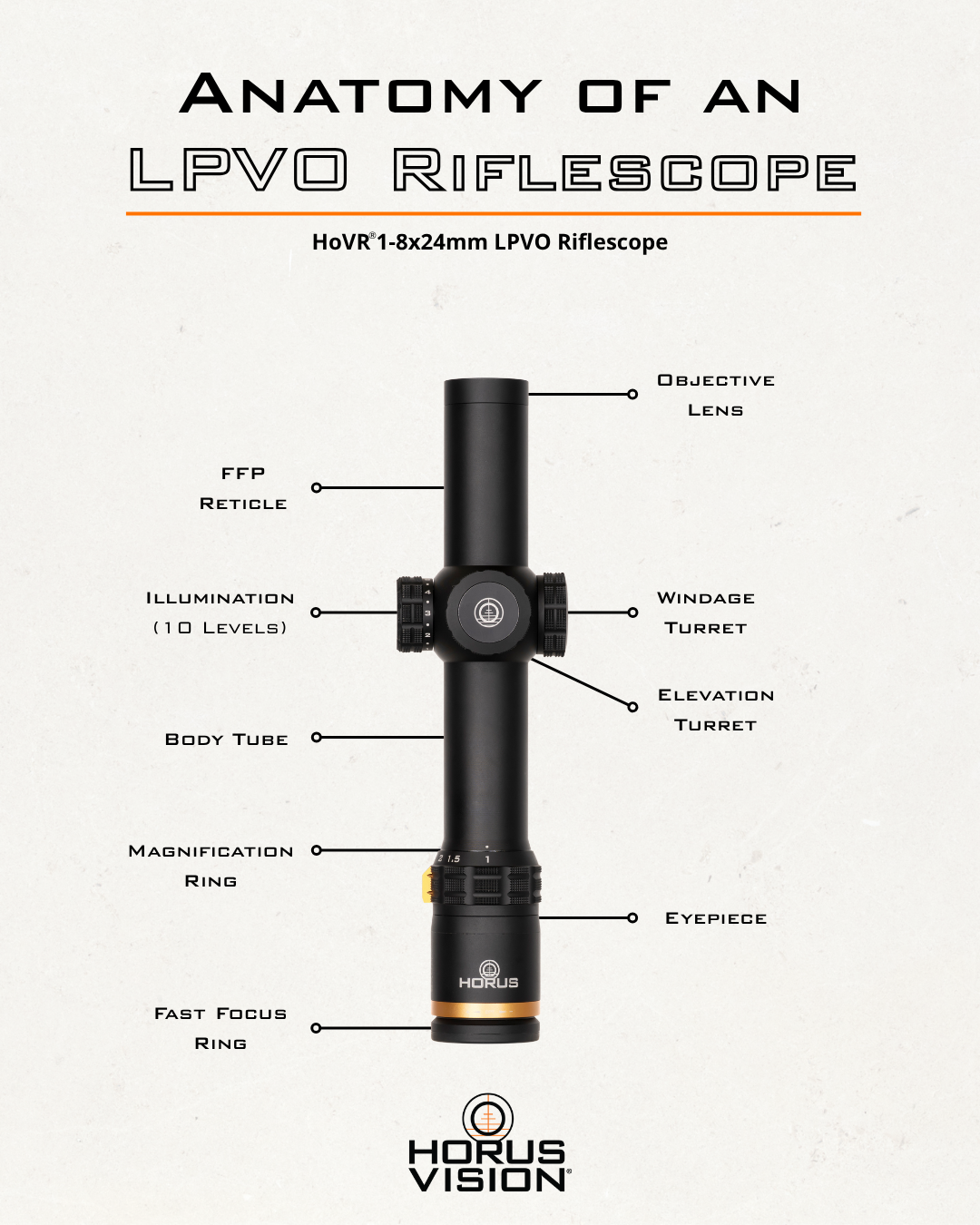
HoVR® 5-20x50mm vs. HoVR® 1-8x24mm
The HoVR® 5-20x50mm is built around higher magnification and long-range precision, while the HoVR® 1-8x24mm LPVO is designed to move from close-range speed to mid-range precision in one optic.
Neither approach is inherently better. The right optic depends on your shooting application.
Here is a quick breakdown of the two riflescopes:
|
Feature |
HoVR® 5-20x50mm |
HoVR® 1-8x24mm LPVO |
|
Magnification |
5-20x |
1-8x |
|
Objective Lens |
50mm |
24mm |
|
Tube Diameter |
30mm |
34mm |
|
Focal Plane |
FFP |
FFP |
|
Reticle |
TREMOR3®, TREMOR5®, TREMOR9™, H59®-MOA |
TREMOR7™ |
|
Illumination |
No |
Yes |
|
Elevation |
Exposed, settable zero |
Capped |
|
Windage |
Capped |
Capped |
|
Primary Role |
Long-range precision |
Short-to-medium range versatility |
How Every Part Works Together
The real value of a riflescope isn’t any one individual component. It’s how all of these parts work together.
Here’s how we would suggest getting your scope set up:
Mount the scope: Use the correct rings or mount for your scope’s tube diameter.
Set your eye position: Position the scope so you have proper eye relief and a comfortable sight picture.
Focus the reticle: Use the fast-focus ring to make the reticle sharp to your eye.
Choose your magnification: Use the magnification ring to select the appropriate level of magnification.
Set your parallax: If your scope has parallax adjustment, set it appropriately for your shooting distance.
Zero the rifle: Use your elevation and windage adjustments to establish your zero with multiple shots.
Learn your reticle: Understand the measurements, hold points, and other features built into your particular reticle.
Once you understand what each component does, the scope becomes much less intimidating, and you can start learning how to effectively use the optic as a complete system.
Frequently Asked Questions About Riflescopes
Q: What does 5-20x50mm mean on a riflescope?
The numbers describe the scope’s magnification range and objective lens diameter. A 5-20x50mm scope provides 5x to 20x magnification and has a 50mm objective lens.
Consequently, the same is true for the 1-8x LPVO riflescope. It has a 1x to 8x magnification range and a 24mm objective lens.
Q: What is the difference between elevation and windage?
Elevation controls vertical adjustment, while windage controls horizontal adjustment in your scope.
Q: What does FFP and SFP mean?
FFP stands for First Focal Plane. In an FFP riflescope, the reticle increases and decreases in size as you change magnification, keeping the reticle’s subtensions consistent across the magnification range.
SFP stands for Second Focal Plane. In an SFP riflescope, the reticle remains the same size regardless of magnification, meaning the reticle’s subtensions are only accurate at one specific power setting (usually maximum magnification).
Click here for more info on FFP and SFP reticles.
Q: What is parallax on a riflescope?
Parallax is the apparent movement between the reticle and target when your eye position changes. A parallax adjustment helps minimize this effect at a given distance.
VIDEO: "How to Set Riflescope Parallax"
Q: Do bigger objective lenses make a scope better?
Not necessarily. A larger objective lens can help with light transmission, but it can also increase the size and weight of the optic. The ideal objective size depends on the scope’s intended application.
Q: What is an LPVO?
LPVO stands for Low Power Variable Optic. An LPVO typically starts at a low magnification, often around 1x, and can be increased for greater magnification when needed. The HoVR® 1-8x24mm is an example, offering 1-8x magnification.
Q: What are the turrets on a riflescope used for?
Turrets allow you to make adjustments to the point of impact. The elevation turret handles vertical adjustments, while the windage turret handles horizontal adjustments.
Q: Do I need to adjust every part of my riflescope every time I shoot?
No. It is recommended to make most adjustments during initial setup. Your fast-focus setting, for example, generally stays fixed once properly adjusted. Other controls, such as magnification, parallax, illumination, and elevation or windage, may be adjusted depending on your target and shooting conditions.