
Posted by Horus Vision on Jul 17th 2026
Choosing the right riflescope can dramatically impact your shooting experience, whether you're hunting, competing, or engaging targets at extended distances.
One of the most important decisions when selecting an optic is choosing between a First Focal Plane (FFP) and a Second Focal Plane (SFP) riflescope. While both designs are highly effective, they function differently and offer distinct advantages depending on how and where you shoot.
Understanding how focal planes work, how reticles behave throughout the magnification range, and which applications each design excels in can help you make the right decision.
This guide explains everything you need to know about First Focal Plane and Second Focal Plane riflescopes, including their similarities, differences, advantages, disadvantages, and ideal use cases.
Understanding Focal Planes
First, before comparing FFP and SFP optics, it's important to understand what a focal plane actually is.
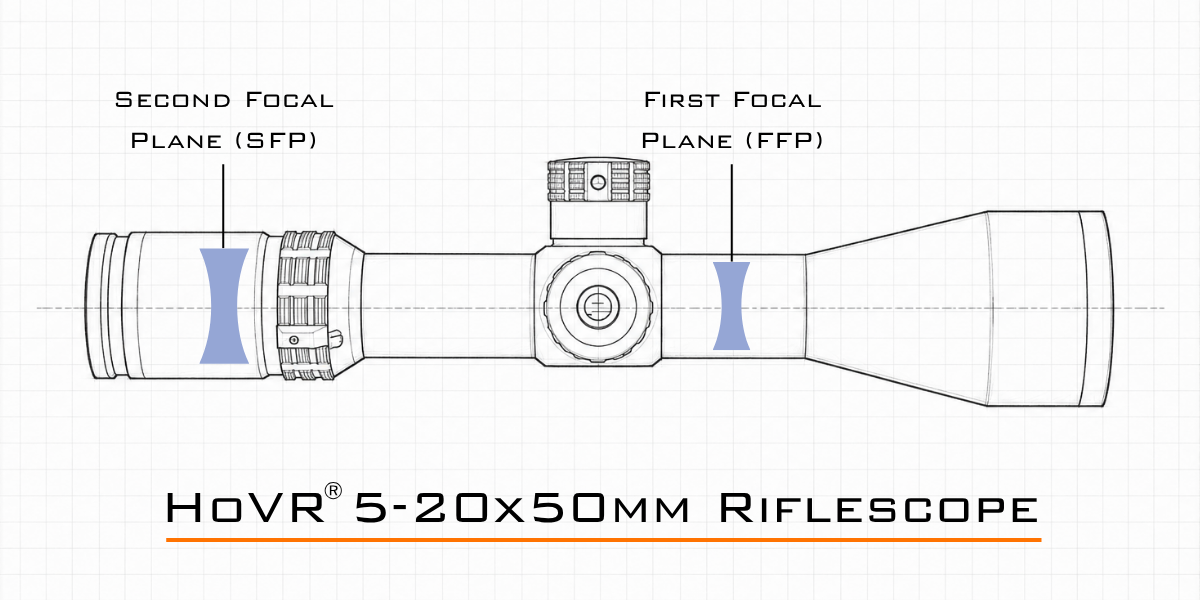
Inside a riflescope, the reticle is positioned at a specific location within the optical system. Depending on where the reticle is placed, it will either appear to change size as magnification increases or remain the same size regardless of magnification.
A First Focal Plane riflescope places the reticle in front of the magnification assembly. As magnification changes, the reticle appears to grow and shrink along with the field of view.
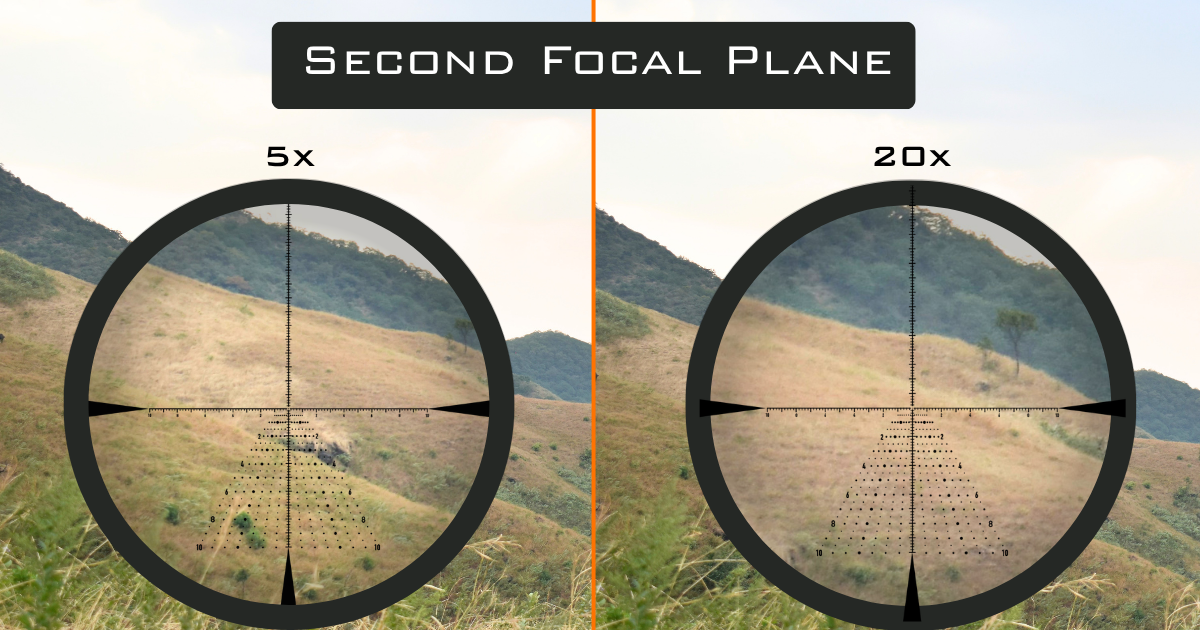
A Second Focal Plane riflescope places the reticle behind the magnification assembly. As magnification changes, the target image grows or shrinks, but the reticle remains visually the same size.
This single difference affects how holdovers, ranging, and reticle subtensions function throughout the scope's magnification range.
What Is a First Focal Plane (FFP) Riflescope?
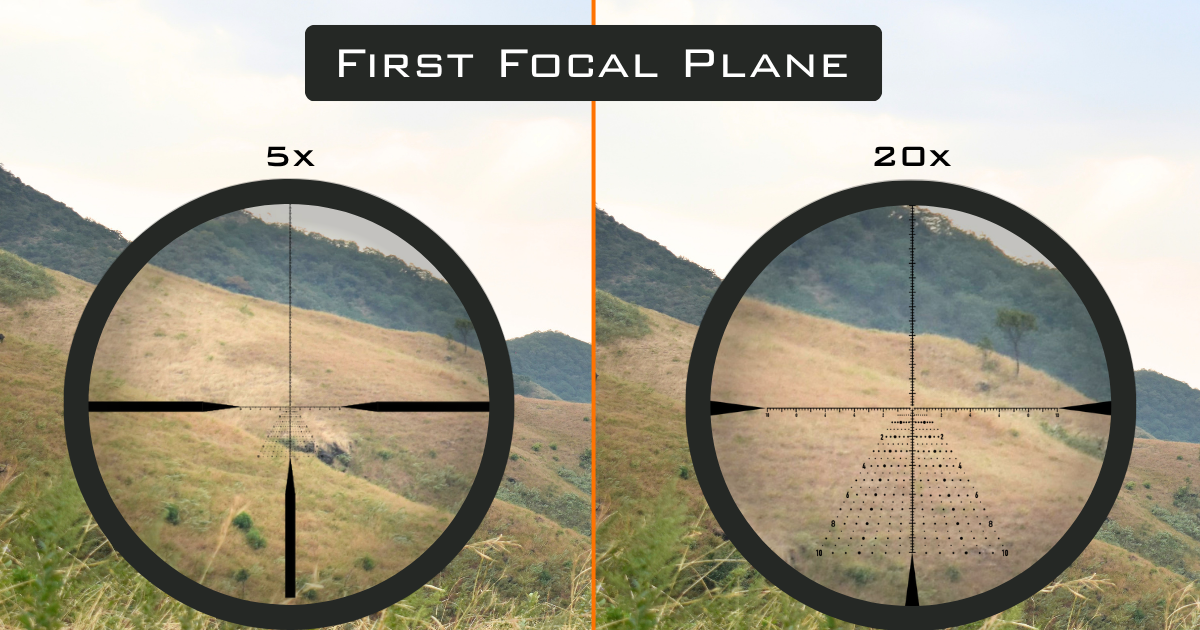
In a First Focal Plane scope, the reticle scales proportionally with the image as magnification changes. When you zoom in, both the target and reticle become larger. When you zoom out, both become smaller.
The primary advantage of an FFP scope is that all reticle measurements remain accurate at every magnification setting. Whether you're shooting at 5x, 10x, 15x, or maximum magnification, the spacing between reticle subtensions represents the same angular measurement.
This allows shooters to:
- Use holdovers at any magnification
- Make accurate wind corrections at any magnification
- Range targets using the reticle at any magnification
- Transition quickly between targets without changing magnification settings
For long-range shooters, precision rifle competitors, and tactical users, these benefits can be extremely valuable because they eliminate the need to remember a specific magnification setting for calculations.
Advantages of FFP Scopes
Accurate subtensions at all magnifications
The greatest advantage of FFP optics is consistency. Every holdover mark remains valid regardless of magnification level.
Ideal for dynamic shooting situations
Shooters can engage targets at varying distances while adjusting magnification without affecting reticle-based calculations.
Excellent for long-range shooting
Precision shooters frequently use reticle holdovers and wind holds. FFP scopes make these references straightforward and consistent.
Faster target engagement
There is no need to verify that the scope is set to a specific magnification before using reticle references.
Potential Drawbacks of FFP Scopes
Reticles can appear small at low magnification
At lower magnification settings, some reticles may appear very fine and less visible, particularly in low-light conditions.
Reticles can appear thick at maximum magnification
Depending on the design, portions of the reticle may become visually larger at higher magnifications.
Typically higher cost
FFP optics generally require more complex engineering and are often found in premium riflescope categories.
What Is a Second Focal Plane (SFP) Riflescope?
In a Second Focal Plane scope, the reticle remains the same apparent size regardless of magnification. As you zoom in, the target image increases in size while the reticle stays unchanged.
This design has been popular for decades and remains extremely common among hunters and recreational shooters.
Because the reticle stays the same size, it often appears easier to see at low magnification and maintains a consistent appearance throughout the zoom range.
However, reticle subtensions are typically only accurate at one specific magnification setting, usually the highest magnification or another designated power determined by the manufacturer.
Advantages of SFP Scopes
Consistent reticle appearance
The reticle remains easy to see throughout the magnification range, if that is what the shooter prefers.
Popular among hunters
Many hunters appreciate the clean, familiar sight picture provided by SFP optics.
Often lower cost
SFP scopes are generally less complicated and less expensive than comparable FFP models.
Excellent for fixed-distance shooting
Shooters who primarily dial elevation adjustments rather than using reticle holdovers may prefer an SFP over the benefits of an FFP reticle.
Potential Drawbacks of SFP Scopes
Subtensions only work at designated magnifications
Holdover marks and ranging features are only accurate at specific power settings.
Less flexible for dynamic shooting
Shooters must verify magnification settings before relying on reticle measurements.
Potential for user error
Incorrect magnification settings can lead to inaccurate holdovers and missed shots. Increased chance of error.
Similarities Between FFP and SFP Scopes
Despite their differences, FFP and SFP riflescopes share many characteristics.
Both can provide:
- Excellent optical clarity
- Precise windage and elevation adjustments
- Illuminated reticle options
- Long-range accuracy
- Durable construction
- Weather-resistant performance
It's important to understand that focal plane placement alone does not determine optical quality. A high-quality SFP scope can outperform a poorly designed FFP scope and vice versa.
The best choice often comes down to intended use rather than one design being universally superior.
Comparing FFP and SFP Side by Side
When comparing the two systems directly, the decision often centers around how you use your reticle.
FFP scopes excel when shooters frequently use holdovers, wind corrections, and reticle ranging across multiple magnification settings. They are especially valuable in competitive shooting, tactical applications, and long-range precision shooting.
SFP scopes excel when shooters prioritize a consistent reticle appearance and typically shoot at known distances or use turret adjustments rather than reticle holds. They remain a popular choice for hunting, recreational shooting, and general-purpose applications.
Neither system is inherently better than the other. Each is designed to solve different shooting challenges.
Which Scope Is Best for Hunting?
The answer depends on the type of hunting and the end user’s preference.
For hunters who primarily shoot within moderate distances and want a bold, easy-to-see reticle in changing light conditions, SFP optics continue to be a strong option.
For hunters pursuing game across varying terrain where shots may occur at significantly different distances, an FFP optic offers greater flexibility. The ability to use holdovers accurately at any magnification can be particularly beneficial in fast-changing situations.
Modern FFP reticle designs have also improved significantly, offering better visibility and illumination than earlier generations.
Which Scope Is Best for Long-Range Shooting?
For dedicated long-range shooting, FFP optics have become the preferred choice for many experienced shooters.
Long-range engagements often require rapid elevation and wind corrections while shooting at different magnification levels. An FFP reticle ensures that holdover references remain accurate throughout the zoom range.
This consistency simplifies shot corrections and allows shooters to focus more on fundamentals and less on magnification-dependent calculations.
HoVR® FFP Riflescopes
For shooters seeking the benefits of a modern First Focal Plane optic, the HoVR lineup includes options designed for both close-range versatility and long-range precision.
The HoVR® 1-8x FFP riflescope is ideal for shooters who need a highly adaptable optic capable of handling everything from close-quarters engagements to intermediate-range targets.
The First Focal Plane design ensures that reticle references remain accurate throughout the entire magnification range, making it an excellent choice for modern sporting rifles, competition shooting, and tactical applications.
View the HoVR® 1-8x24mm LPVO Riflescope for more information regarding the HoVR® 1-8x LPVO Riflescope and TREMOR7™ LPVO reticle.
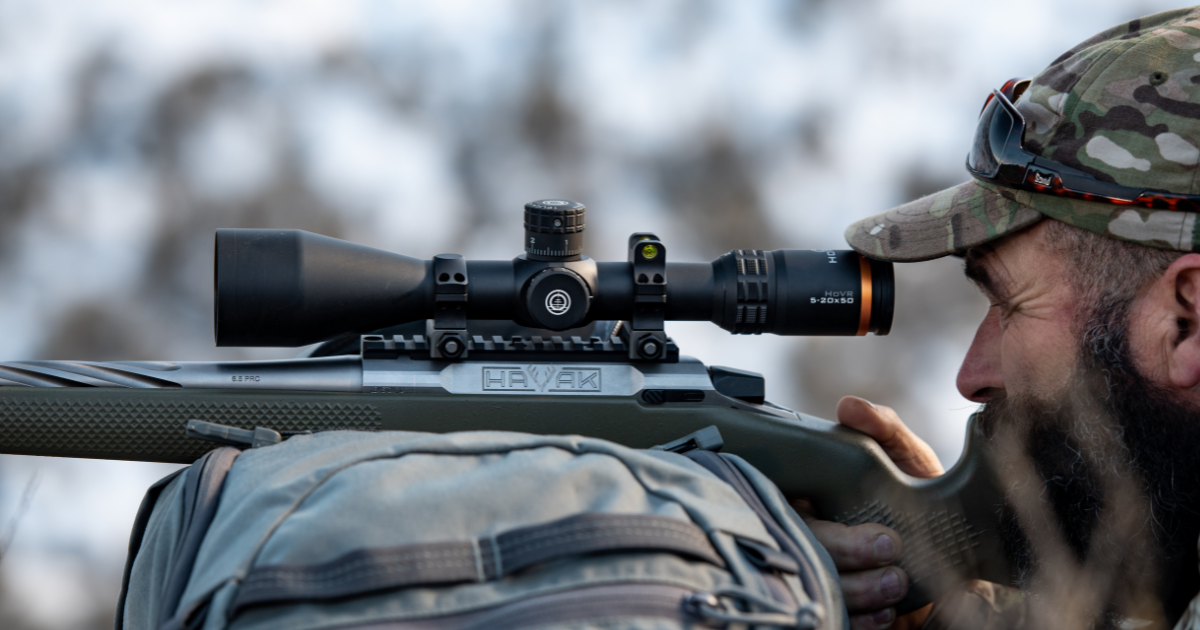
For those focused on precision and extended-range performance, the HoVR® 5-20x FFP riflescope provides the magnification range and reticle functionality needed for long-distance target engagement.
Its First Focal Plane configuration allows shooters to utilize holdovers and ranging features consistently across all power settings, delivering the flexibility demanded by serious precision shooters and hunters.
View the HoVR® 5-20x50mm Riflescope for more information regarding the HoVR® 5-20x Riflescope
Both scopes demonstrate the advantages that have made FFP optics increasingly popular among today's shooting enthusiasts.
Final Thoughts
Like most optic decisions, the choice between a First Focal Plane and Second Focal Plane riflescope ultimately comes down to how you shoot and what features matter most to you.
Both technologies have proven themselves in the field for decades. By understanding how each system works and matching the optic to your specific shooting style, you can select a riflescope that enhances performance, improves confidence, and helps you get the most out of every shot.