
Posted by Horus Vision on Aug 5th 2026
Few reticles have had the impact on precision shooting that the H59™ reticle has had over the last two decades.
Long before holdover grids became common in precision rifle optics, the H59™ introduced shooters to a faster, more efficient way of engaging targets at varying distances without constantly dialing elevation and windage.
Today, the H59™ remains one of the most recognizable and respected reticle designs in the world. Trusted by military personnel, law enforcement professionals, competitive shooters, hunters, and long-range enthusiasts, the H59™ has earned its reputation through real-world performance.
As shooting disciplines have evolved, so has the demand for different angular measurement systems. While the original H59™ Revolutionary Riflescope Reticle is built around milliradians (MRAD), Horus Vision also offers the H59™-MOA Advanced Hunting Reticle for shooters who prefer working in Minutes of Angle (MOA).
Let's take a closer look at both legendary reticles and explore the strengths of each.
The H59™ That Started It All
The original H59™ Revolutionary Riflescope Reticle helped redefine how shooters engage targets at distance.
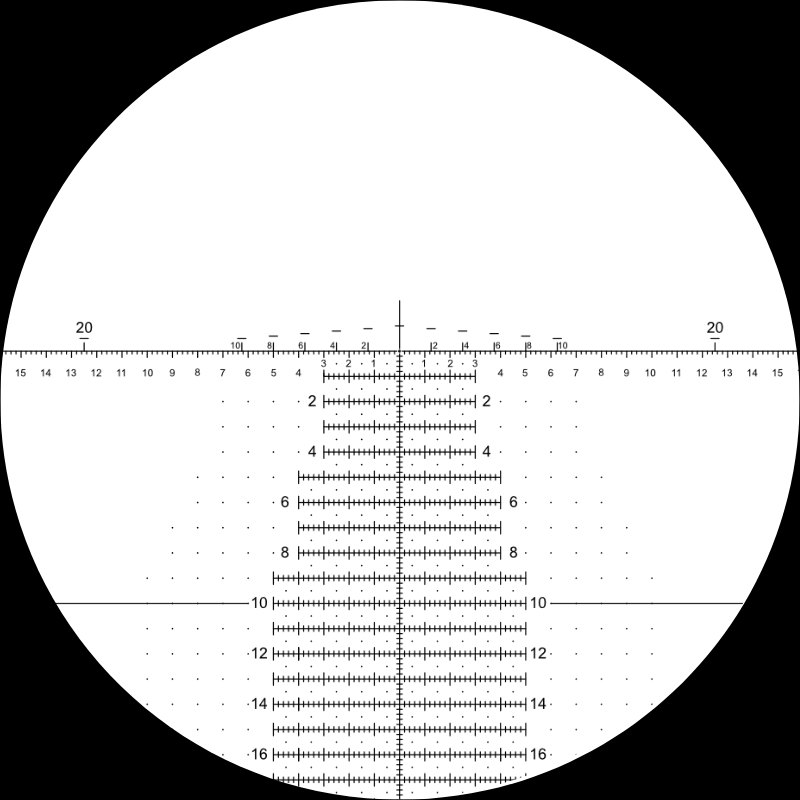
Built around a uniform 0.2 milliradian Horus Grid, the H59™ Revolutionary Riflescope Reticle gives shooters the ability to quickly compensate for bullet drop, wind drift, and environmental conditions using holdovers rather than dialing adjustments.
The grid design provides precise aiming references throughout the field of view, making it possible to engage multiple targets rapidly while maintaining accuracy.
Many of the world's most elite marksmen continue to use the H59™Revolutionary Riflescope Reticle today because of its versatility and efficiency.
Key Features of the H59™ Revolutionary Riflescope Reticle
Horus Grid
The foundation of the H59™ is its uniform 0.2 milliradian Horus Grid.
This grid provides numerous aiming points for precise holds at virtually any distance. Instead of estimating holdovers in open space, shooters can use clearly defined reference points throughout the reticle. The result is faster target engagement and more precise shot placement.
The grid also excels at Second Shot Corrections. Spotting an impact and making a correction becomes significantly easier because the reticle provides an immediate visual reference for adjusting for elevation and wind.
Rapid Range Bars
The patented Rapid Range Bars are one of the most recognizable features of the H59™.
Subtending from 0.5 to 1 milliradian, these bars allow shooters to quickly estimate the distance to targets of known size.
The Rapid Range Bars also work seamlessly with the Accuracy 1st Speed Shooting Formula, giving shooters another method for solving long-range shooting problems quickly and efficiently.
Moving Target Holds
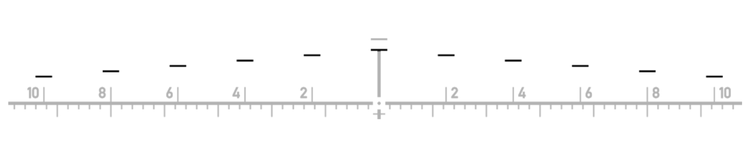
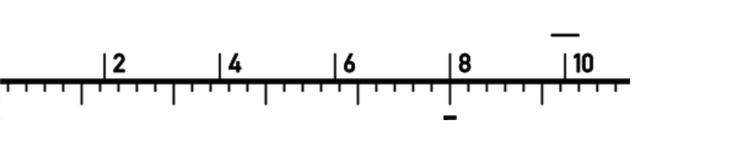
The H59™ incorporates dedicated moving target hold references on either side of the primary horizontal stadia.
These numbered vertical hash marks provide lead references for targets moving up to 10 mph and are effective across many common calibers between roughly 200 and 500 yards. They can also be incorporated into the Accuracy 1st Speed Shooting Formula for advanced applications.
Horus Ballistics App Compatibility
The H59™ pairs exceptionally well with the Horus Ballistics App, allowing shooters to build accurate firing solutions and streamline their workflow from data collection to target engagement. Download the Horus Ballistics App to find a full reticle tutorial for the H59™ and other Horus reticles in the app.

The H59™-MOA Advanced Hunting Reticle
As the popularity of the H59™ continued to grow, many shooters asked for a version calibrated in MOA. Horus Vision answered the call with the H59™-MOA Advanced Hunting Reticle.
While the overall philosophy remains the same, the H59™-MOA adapts the proven H59™ design to the angular system preferred by many hunters and traditional American shooters.
The result is a reticle that delivers the same rapid holdover capability and precise correction references that made the original H59™ famous, but in a format that feels familiar to MOA users.

Key Features of the H59™-MOA
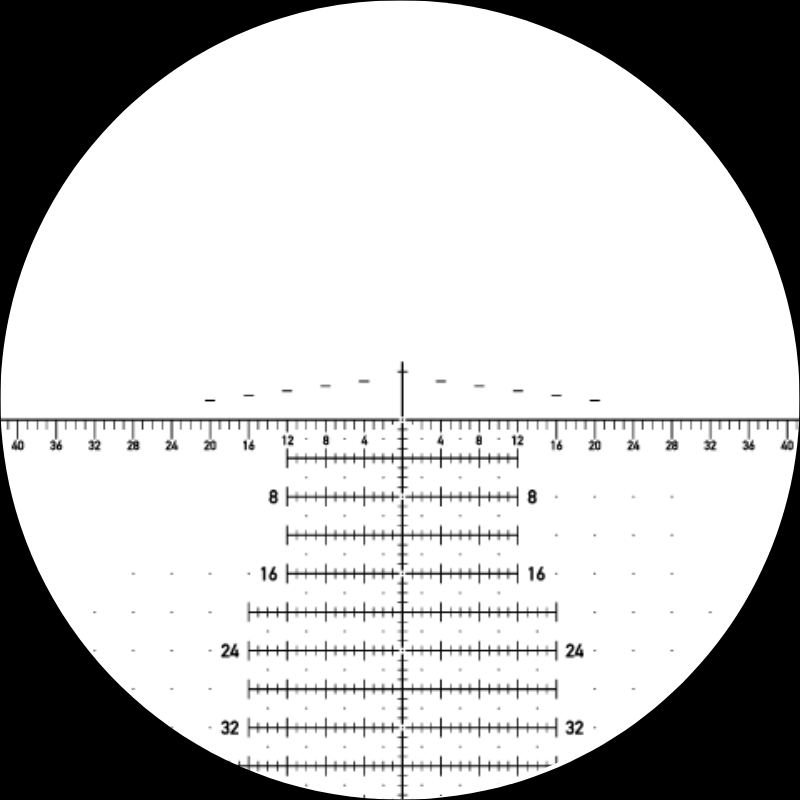
1 MOA Horus Grid
The H59™-MOA utilizes a uniform 1 MOA Horus Grid.
Like its MRAD counterpart, the grid allows shooters to compensate for bullet drop and shifting wind while maintaining multiple references throughout the field of view.
The solid grid design helps eliminate guesswork and enables fast follow-up shots when corrections are required and time is of the essence.
For hunters, this can be particularly valuable when a quick second-shot opportunity presents itself.
Rapid Range Bars
The H59™-MOA incorporates patented Rapid Range Bars calibrated from 2 to 5 MOA.
These ranging references allow shooters to quickly estimate distance to known-size targets, all via the reticle.
Horus Ballistics App Integration
The H59™-MOA works seamlessly with the Horus Ballistics App, making it easy to generate custom range cards and ballistic solutions tailored to specific rifles, ammunition, and environmental conditions.
Understanding MRAD vs MOA
Before choosing between the two H59™ variants, it's important to understand the difference between MRAD and MOA.
Both systems are simply angular measurements used to describe bullet trajectory and target corrections.
MRAD (Milliradians) divides angular measurements into tenths and is commonly used in military, law enforcement, and modern precision rifle applications.
MOA (Minute of Angle) divides angular measurements differently and has long been popular among hunters and traditional long-range shooters in North America.
Neither system is inherently more accurate than the other.
The best system is typically the one that matches your existing equipment, training, and preferred method of communication.
Check out our blog article “A Shooter’s Guide to MRAD and MOA Reticles” for more information on either reticle option.
You can also try both the H59™ Revolutionary Riflescope Reticle and the H59™-MOA Advanced Hunting Reticle in the Horus Vision Reticle Simulator before ever stepping onto the range or firing a shot.
When Should You Choose the H59™ MRAD?
The original H59™ Revolutionary Riflescope Reticle is an excellent choice if:
- You already shoot with MRAD-based optics.
- You participate in PRS, NRL, or tactical-style competitions.
- You frequently communicate corrections with other MRAD shooters.
- You prefer decimal-based calculations.
- You want compatibility with common military and law enforcement standards.
- You use the Accuracy 1st Speed Shooting Formula.
The MRAD version remains the preferred choice for many precision rifle shooters because of its widespread adoption throughout the long-range shooting community.
When Should You Choose the H59™-MOA?
The H59™-MOA Advanced Hunting Reticle may be the better option if:
- Your current optics and rifles are MOA-based.
- You have years of experience thinking in MOA.
- You primarily hunt rather than compete.
- You prefer MOA adjustment systems.
- You want the advantages of the Horus Grid without switching measurement systems.
For many hunters, the H59™-MOA offers the perfect balance between traditional MOA familiarity and modern holdover-reticle capability.
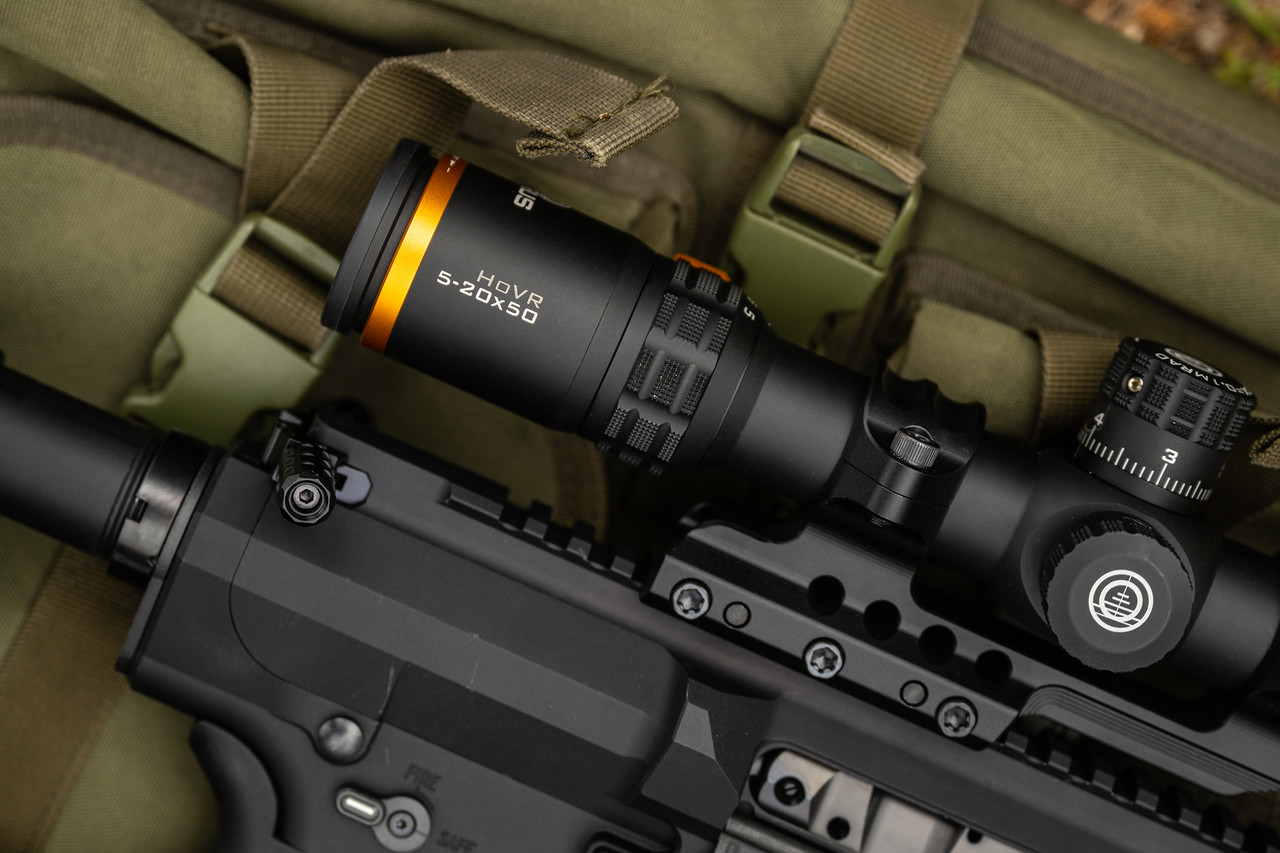
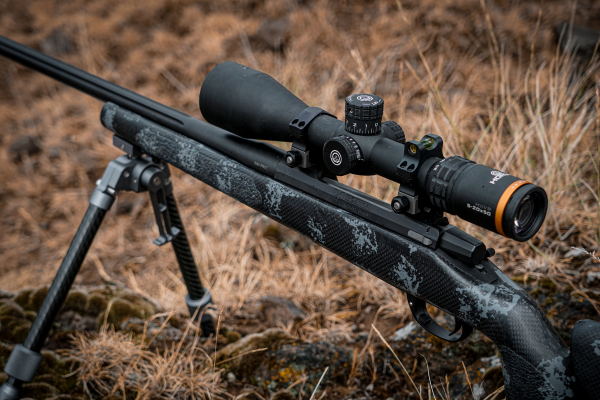
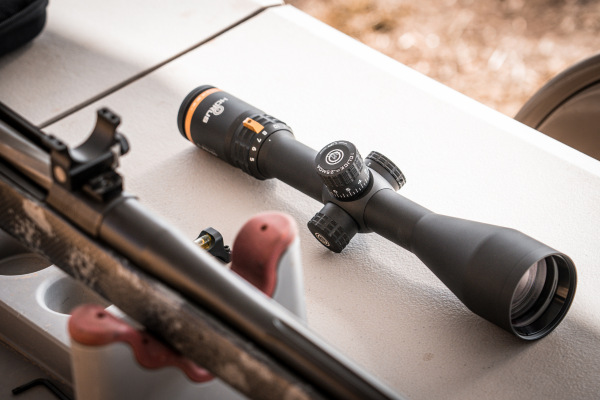
You can find both the H59™ Revolutionary Riflescope Reticle and the H59™-MOA Advanced Hunting Reticle in the Horus HoVR 5-20x50mm Riflescopes or through select Horus Reticle Licensees.
If you feel like you need a bit more information before moving forward, check out this article by Todd Hodnett about “How to Choose the Right Riflescope” to better help you make the best choice.
Why the H59™ Remains Relevant
Many reticle designs have appeared since the H59™ was first introduced, but the H59™ remains relevant because it solved real problems that shooters still face today.
The ability to quickly hold for elevation and wind, observe impacts, make immediate corrections, and engage multiple targets efficiently remains just as valuable now as it was when the reticle first appeared.
The H59™ wasn't simply another reticle. It helped establish an entirely new category of precision shooting optics.
Its influence can still be seen in countless grid-style reticles across the industry.

Looking Beyond the H59™: The Evolution of Horus Reticles
For shooters who love the H59™ but want to explore the next evolution in Horus reticle technology, the TREMOR series is worth serious consideration.
The TREMOR family builds upon the foundation established by the H59™ while introducing advanced features designed to increase speed and efficiency even further. Features such as the Wind Dots system, enhanced ranging capabilities, and additional target engagement tools have made TREMOR reticles popular among professional users and experienced long-range shooters.
Whether you're considering a move from MOA to MRAD or simply want to explore the latest advancements in precision shooting reticles, be sure to read our complete guide to the TREMOR reticle family.
Final Thoughts
The H59™ has earned legendary status for a reason. Its innovative grid design, patented Rapid Range Bars, and practical holdover system transformed the way shooters engage targets at distance.
Today, shooters can choose between two versions of this iconic reticle: the original H59™ Revolutionary Riflescope Reticle in MRAD and the H59™-MOA Advanced Hunting Reticle in MOA.
The decision ultimately comes down to the measurement system that best fits your shooting style and experience.
If you're already invested in MRAD, the original H59™ remains one of the most proven reticles available.
If you're an MOA shooter looking for the speed and precision advantages of the Horus Grid, the H59™-MOA delivers those benefits without requiring you to change systems.
Whichever version you choose, you'll be using a reticle that helped shape modern long-range shooting and continues to perform at the highest levels today.